
Brain foods for homework time: Snacks that beat packaged chips
2 Nov 2026
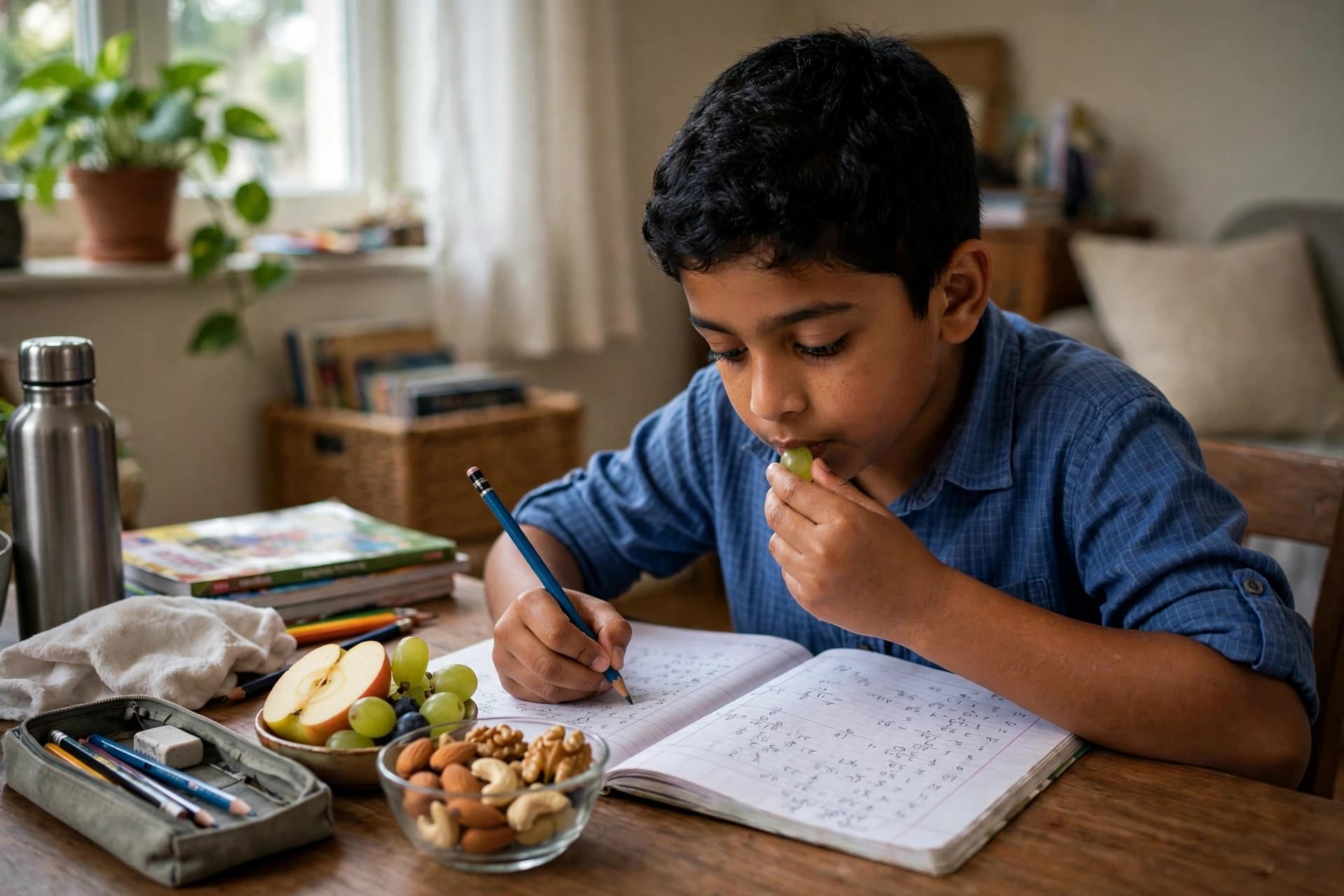
Often, kids are attracted to packaged chips, candies, and chocolates. A growing brain requires healthy and balanced food, not unhealthy packaged junk food. Eating unhealthy food at a very young age can impair their growth and cognitive development at very young age. Eating sugary and fried foods at a very young age causes brain fog and cognitive fatigue that leads to loss of concentration in school and during studies.
So let's discuss some brain-building nutrients and foods for kids’ growth and for their well-being.
The first nutrients are omega-3 fatty acids, which are essential nutrients for brain development and for cognitive health. So include omega-3 fatty acids according kid’s plate, include dishes like choco-nut ladoos which has walnuts, almonds, pumpkin seeds and flaxseeds and chia seeds. Include walnut barfi sweetened with dates, which will provide a good amount of omega-3 fatty acids.
The next nutrients are iron and zinc, which are required for strong immunity and for cognitive health and development. Iron is needed for hemoglobin, which carries oxygen in the blood and supports energy and brain development. So, for this, include dishes like ragi porridge, ragi roti, ragi ladoo, spinach and paneer paratha, or garden cress seed ladoos.
Other nutrients are choline & lutein; these are important for memory retention and learning retention, and it also protects the growing brain tissue; include dishes like corn and spinach paratha, egg sandwiches, carrot halwa, tomato soup, and corn chhat with lots of vegetables in it.
Also, don’t start your kid’s breakfast with sugary cereals; try to give something wholesome and rich in protein. Giving sugary breakfasts like milk and biscuits, or chocolate cereals, leads to an energy crash later in the day, which leads to crankiness and leaves the kid with drained energy and irritation, which leads to loss of interest in studies, and their concentration decreases eventually.
Start your kid’s breakfast with a protein-rich meal like moong dal chilla, eggs, paneer wrap, or paneer and palak paratha, or besan chilla, or yoghurt with berries in it.
Limit or avoid giving ultra-processed packaged foods and outside foods, as they contain refined sugars, artificial food dyes, excessive sodium, excess sugar and preservatives in the food.
These food intakes can trigger hyperactivity, shortened attention spans, and irritability in sensitive children.
So let’s see the healthy swaps for this :
Swap potato chips with roasted makhana or air-fried potato wedges.
Swap packaged cheese balls with whole-grain crackles with some light seasoning.
Swap nachos with crispy beetroot chips with light seasoning, with some hummus or avocado dip.
The more you include a rainbow plate on your kid’s plate, the more beneficial it will be for their health. Include colorful vegetables in the food dishes that they will enjoy eating. Include dishes like crispy vegetable balls (air-fried), vegetable paratha, and vegetable wrap.
Transitioning after-school snacking from ultra-processed chips to nutrient-dense whole foods does far more than satisfy hunger; it leads to calm, sustained focus. When we feed a child’s brain the steady energy of complex fiber, the neural support of healthy fats, and the vitamins it genuinely needs, we eliminate the steep glucose crashes, restlessness, and mood swings. Swapping out the bag of chips isn’t about strict restriction or perfection; it is about setting young minds up to thrive. By making simple, crunchy, and wholesome alternatives readily accessible, parents can restore after-school peace of mind, nourish cognitive potential, and gently build healthy dietary instincts that serve kids long after the homework is finished.