
Building Muscle on a Vegetarian Diet: Can You Gain Strength Without Meat or Whey?
9 Nov 2026
Why the question?
A lot of people in India follow a vegetarian diet for cultural, religious, ethical or personal reasons. The gym community can often be quite meat centric meaning a lot of people who follow a vegetarian, vegetarian or vegan diet will wonder if they can do strength training.
Yes they can, with some planning! This article is aimed at everyday gym goers and recreational lifters. All diets will be treated equally.
How do I build muscle?
Regular strength training sessions, adequate overall caloric intake, adequate protein intake throughout the day, adequate sleep and recovery.
Studies show that results depend more on how much protein you are consuming overall, how much training you’re doing and how much you’re eating overall. Some plant based proteins can be lower in some amino acids but this can be balanced out by eating a variety of food throughout the day. A classic example would be eating dal with rice/roti. Results will also depend on your age, genetics, training experience, health and budget. There isn’t a faster or slower diet for everyone.
Where can I get my protein from?
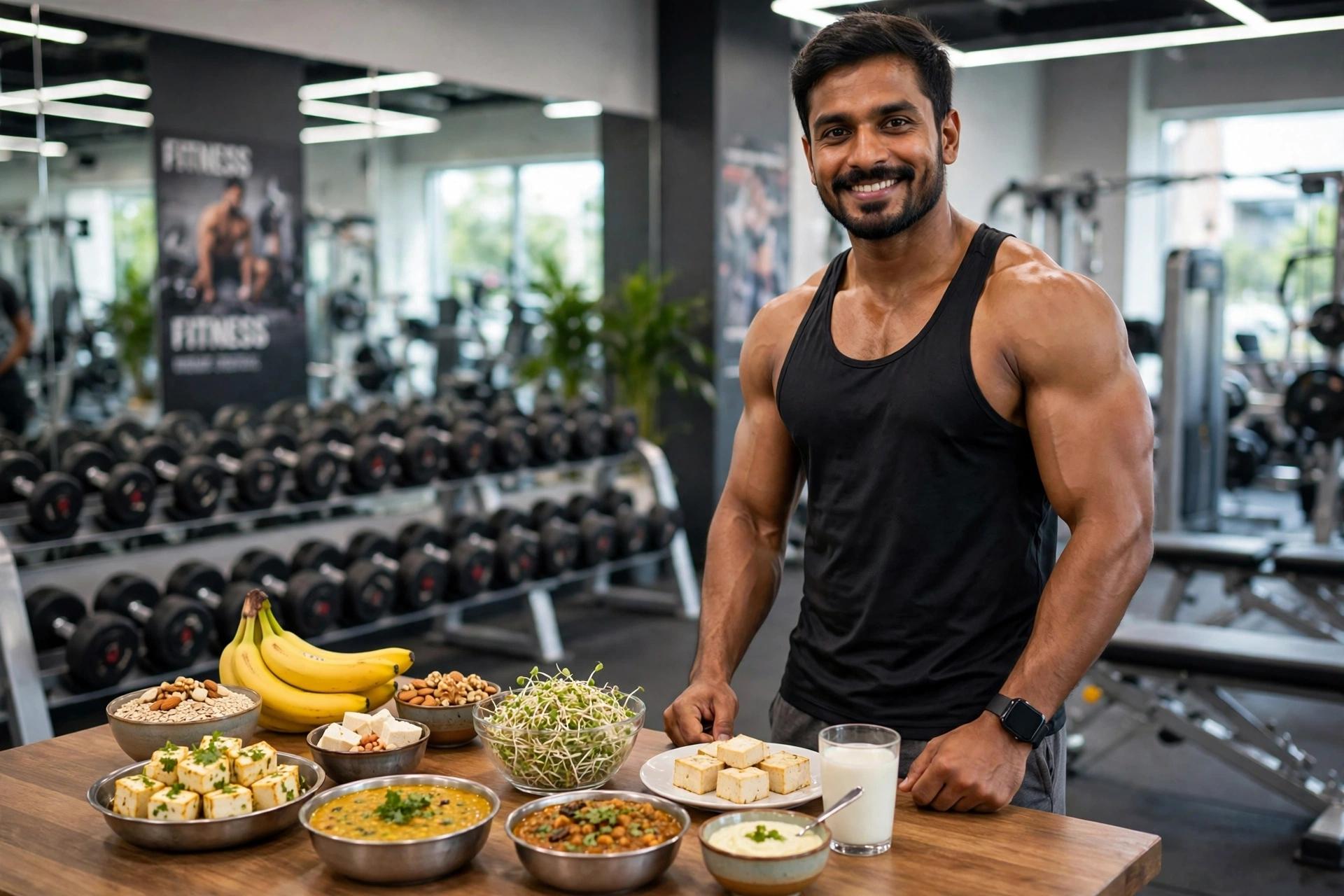
Pulses & legumes (moong, masoor, toor & chana dal, rajma, chole, lobia, sprouts & hummus). Can be eaten as a dal, curry, salad or chaat.
Soy (tofu, soya chunks & tempeh). Complete protein source. Can be eaten as a stir fry or in curries. Most people can eat these in moderation and variety. If you have thyroid issues or an allergy to soya then please speak to a doctor.
Dairy & eggs (paneer, curd, milk, buttermilk, greek style yoghurt, cottage cheese & eggs). Vegans can depend on the other categories.
Grains & millets (rice, roti, oats, quinoa, ragi, jowar & bajra). Provides energy for training and can provide some protein. Especially when combined with a dal.
Nuts & seeds (peanuts, peanut butter, almonds, walnuts, pumpkin seeds, sunflower seeds, flax seeds, chia seeds, hemp seeds & sesame seeds). Can be eaten as a snack or sprinkled onto meals. Please check for allergies. These can be high in calories so easy to overeat but you don’t need to track.
Simple meal/snack ideas:
No strict rules, just some ideas!
Breakfast: Dal chilla/besan chilla, Oats with milk/soya milk and seeds.
Lunch: Rajma rice, Roti with dal & curd.
Dinner: Paneer bhurji, Tofu/soya stir fry with roti.
Snacks: Moong sprouts chaat, Chana salad, Peanut chikki, Curd with fruit and nuts.
Pre-workout: Eat something easy to digest. Banana with peanut butter, Poha, Idli, Oats or Curd rice. Post-workout: Dal rice, Khichdi, Paneer paratha or Lassi. Avoid trying anything new right before an intense session.
Protein powders & supplements
Most people can get their requirements from whole foods. Protein powders aren’t necessary but if you want to take one there are plant based options. Soy, pea or rice protein.
Supplements aren’t strictly regulated and quality can vary. Some can contain added sugars, sweeteners and hidden ingredients. Check the label and try to find ones that have been tested by an independent company. Always speak to a doctor or registered dietitian before taking any supplements. Creatine, protein bars etc. aren’t necessary. If you have any kidney issues or other medical issues then please speak to a doctor first.
Nutrients to note:
Vitamin B12: Mainly found in dairy, eggs and fortified foods. Low/none in plant based foods. Vegans should speak to their doctor for testing and advice.
Iron: Lentils, spinach, methi, jaggery & pumpkin seeds. Also have foods high in vitamin C (lemon, amla & guava) to help absorb.
Zinc: Found in pulses, nuts and seeds.
Calcium: Found in dairy, ragi, sesame and leafy greens.
Vitamin D: Sunlight and fortified foods. Common deficiency in India. Best to get tested.
Omega 3: Flax seeds, walnuts, chia. Fish if eating.
Iodine: Iodised salt.
Always speak to a doctor to check these. Don’t guess. Don’t start taking any supplements without advice.
Common mistakes:
Not enough overall intake.
Too many carbs.
Too much protein at one meal.
Relying on high protein processed snacks.
Skipping meals.
Not getting enough sleep.
Compared to online influencers.
Making sudden changes to your diet.
Myths & facts:
The more protein I eat the more muscle I’ll build. False. Once you’ve had enough for your body there isn’t any extra muscle to be built. It may not be suitable for people with certain medical issues.
Who to speak to first:
Don’t use training as a way to ‘earn’ or ‘burn off’ food. Everyone’s bodies change at different rates. If you’re feeling anxious around food, body image or restriction then please speak to a doctor or qualified professional. Young people/teenagers should be guided by a doctor or qualified coach. Don’t take any supplements.
If you have any kidney issues, diabetes, high blood pressure, heart issues, thyroid issues, food allergies, digestive issues, are pregnant or have any other medical issues then please speak to a doctor or registered dietitian before making any changes to your diet or starting a new training programme. If you feel chest pains, dizzy, faint or have severe shortness of breath during exercise stop and seek medical help.