
Cooking Oils 101: Choosing the Right Oil for Your Indian Cooking
9 Nov 2026
Choosing the right oil
When you walk down the oil aisle we can easily get confused. We see oils that are ‘refined’, ‘cold pressed’, ‘blend’, ‘heart friendly’ etc. and online advice can often be conflicting.
Across India different families may have used different oils for many years depending on region, climate and personal preference. This is all valid and is a great starting point.
This article will tell you what makes each oil different and what to use them for. There isn’t a ‘best’ oil to use as it really depends on the dish, how you are cooking and your health.
Understanding the basics
Fats
Cooking oils can contain a mixture of saturated, mono unsaturated and poly unsaturated fats. However most cooking oils will contain all three. Labelling oils as good or bad is not helpful. What matters more is the overall eating pattern. Does the overall diet include a good variety of foods, are they frying a lot and are they using a lot?
Smoke point
Some oils are more suitable for high heat cooking like deep frying and tadka. Whereas others are better for low heat cooking or using in salad dressings. This is due to the oil having a higher smoke point. If it is smoking a lot and has a burnt smell then avoid.
Refined or Cold pressed /kachi ghanis
Refined oils have been highly processed to give a bland taste, pale colour and longer shelf life. Cold pressed and kachi ghanis are less processed and usually retain more of the seed. ‘Cold pressed’ is not regulated so not guaranteed to have increased nutrition, refined oils don’t mean they’re unhealthy. The main difference will be taste. Refined oils will be more bland whereas kachi ghanis often give more of a flavour to the dish.
Common Oils Used in Indian Cooking
Each oil has a purpose. Below is how they are commonly used:
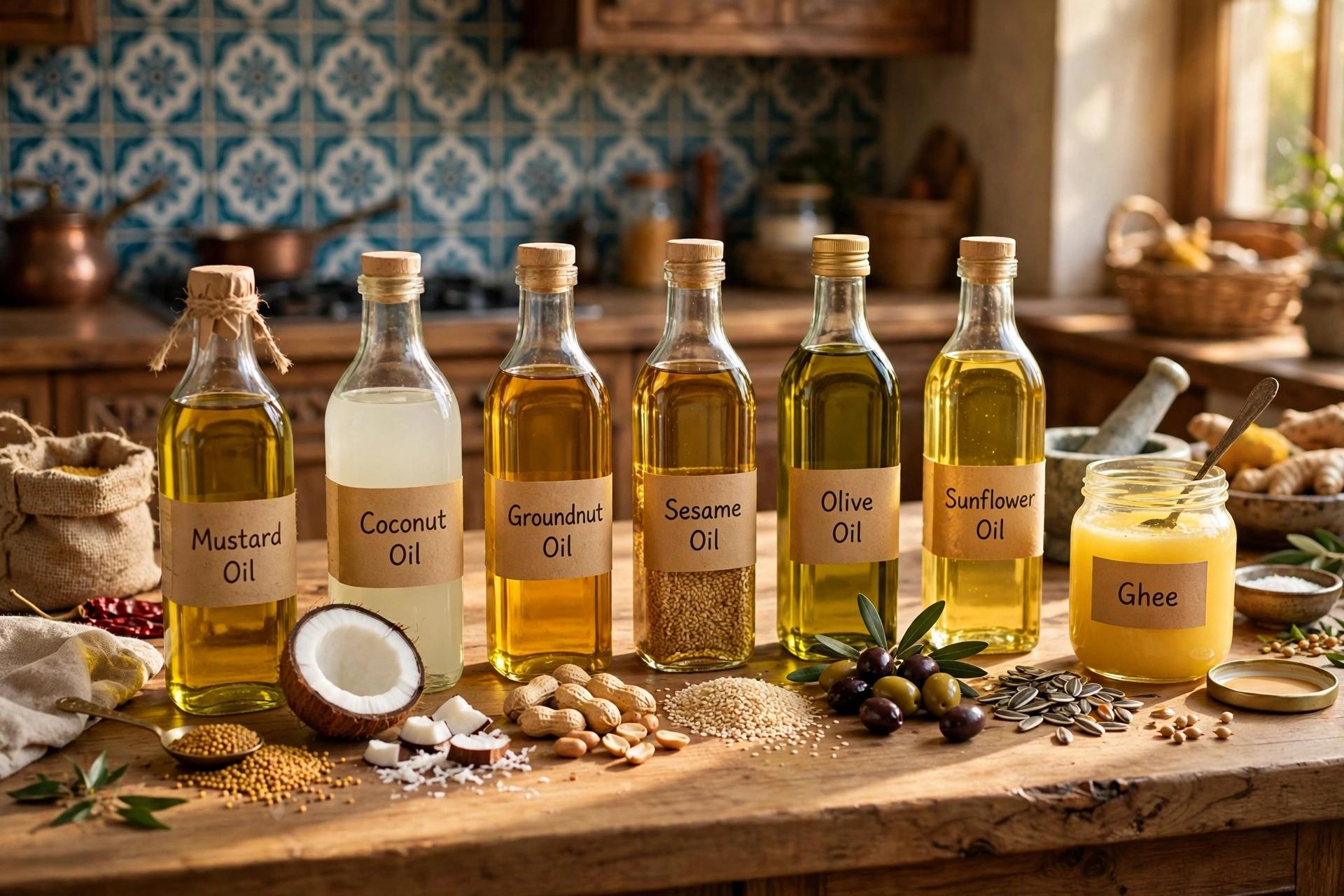
Mustard oil – Commonly used in East and Northern parts of India. Has a strong and pungent taste. Often used in pickles and dishes that need a strong flavour. Research is conflicting and can vary between countries on whether it can be used as an edible oil. If you’re unsure please speak to a doctor or dietitian.
Groundnut oil – Commonly used in Gujarat and Maharashtra. Can be used a lot for frying. However, be aware of peanut allergies.
Sesame oil (gingelly/til) – Commonly used in southern parts of India and over winter. Has a nutty smell. Can have a distinctive flavour and can overpower delicate dishes.
Coconut oil – Commonly used in Kerala and along the coast. High in saturated fats and research can be conflicting. Best to use sparingly.
Rice bran oil, Sunflower oil, Soybean oil and Safflower oil – Easily available refined oils. Used more for everyday cooking and frying. Rice bran oil is often talked about as being more stable when heated. However it has a mild taste so can be used in most dishes but won’t add much flavour.
Olive oil – More suitable for low heat cooking, salads and finishing. Can be expensive and not needed for Indian cooking.
Ghee and Butter – A traditional fat to add flavour. Both contain more saturated fats and research can be conflicting. They can be used in small amounts as part of a varied diet and are part of many healthy eating patterns.
Blends and ‘Heart Friendly’ – Oils can be used in blends. But look at the ingredients list. All plant based oils are cholesterol free so this means nothing.
Tips for Cooking with Oils
Use only the amount of oil required for the recipe. Use a spoon to measure.
Try to use steaming, pressure cooking, roasting, air frying, sautéing and tadka with small amounts of oil rather than deep frying.
Store your oil in a cool, dark place in a sealed container. Throw away any oil that has gone off and smells rancid / bitter.
Try not to reuse frying oil too much or reheat. This can cause harmful compounds.
Throw away your oil in a safe way. Follow local guidelines.
Street foods and restaurant meals can be part of our lives. Don’t feel guilty. We’re trying to create a pattern that works for us.
Many nutritionists would say it’s a good idea to vary your oils. You don’t have to be strict.
Label Reading and Purchasing
Check:
1.Oil type. Read the ingredients list.
2.Manufacturer details, FSSAI Licence number, date of packing and expiry date.
3 .Purchase from a reliable source. Be wary of loose oil without labelling as it can be adulterated.
Myths
Cold pressed oil is always healthier – Not necessarily. Cold pressed is not regulated. Choose what suits your cooking and overall diet.
Refined oil is unhealthy – Not at all. Refined oils are commonly used. They have a bland taste and are stable for many everyday dishes.
Ghee is bad for the heart – Research can be conflicting. Can be used in small amounts as part of a varied diet. Everyone’s needs are different.
Cholesterol free oil is good for the heart – All plant based oils are cholesterol free. So it doesn't really mean anything.
Olive oil is the only healthy oil – Many oils can be used as part of a balanced diet. Olive oil is not needed for Indian cooking.
If I use a ‘healthy’ oil I can eat more fried foods – No oil will counteract a high fried diet. Overall patterns are still the most important.
Research is still being done on many oils and can vary between individuals.
Who to Consult
If you have high cholesterol, heart issues, diabetes, fatty liver, pancreatitis, gall bladder issues, digestive issues, food allergies or any other medical issues please consult a doctor or registered dietitian. If you’re on a medically advised diet then follow this.