
Eating for Endurance – Fundamentals of Fueling for Runners, Cyclists and Marathon Training
2 Nov 2026
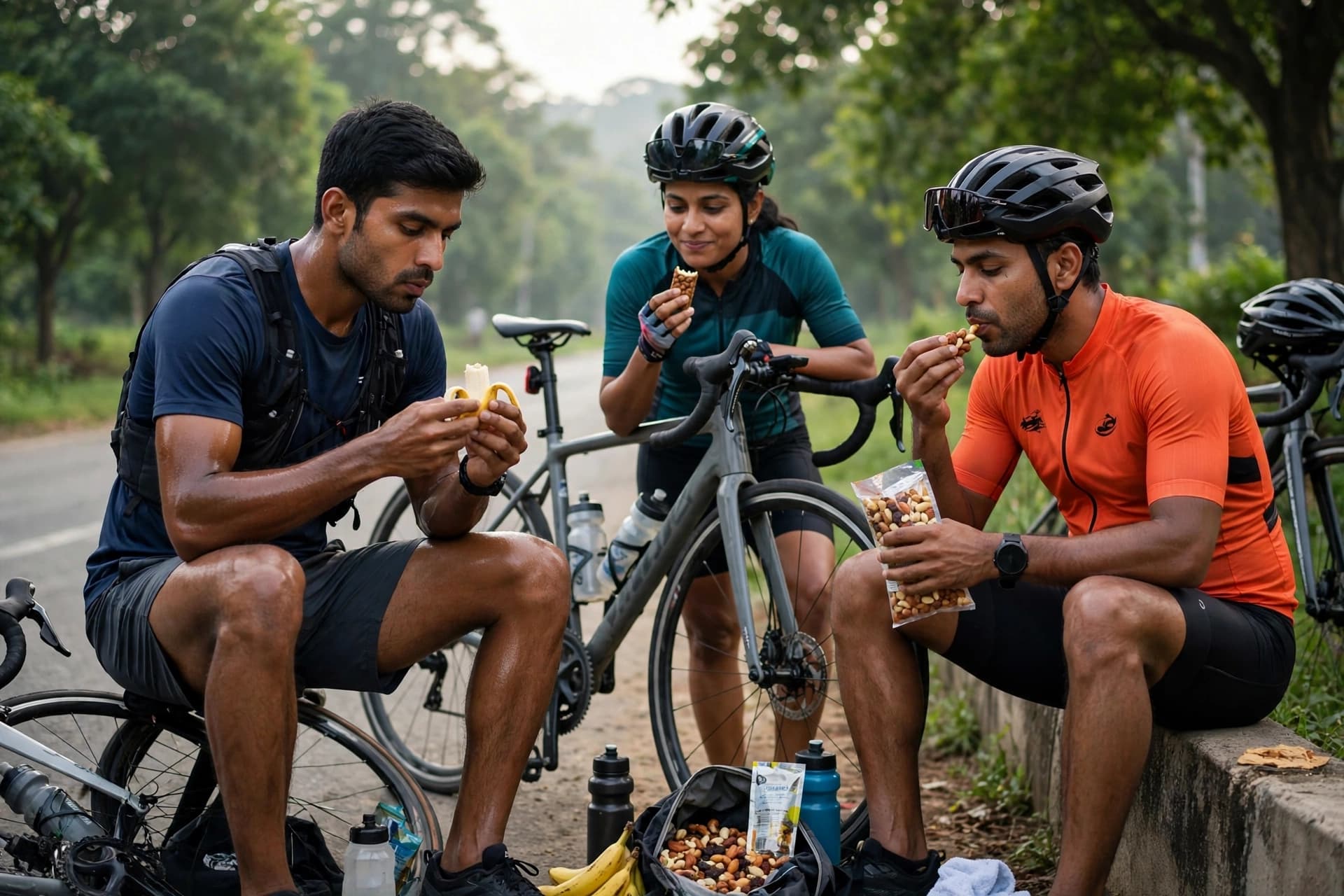
Fueling for Endurance
Carbohydrates – Main source of fuel during longer sessions. Stored in muscles.
Protein – Helps the body to repair and rebuild muscles.
Healthy fats – Found in foods such as nuts, seeds, groundnuts, fish and eggs. Provides us with energy throughout the day.
Fluids and electrolytes – Help replace lost electrolytes and keep your body functioning in the heat.
There is lots of research ongoing in some areas. Everyone will have a different tolerance to food, so take this as a guideline and listen to your body.
Pre, During and Post
Daily meals – Ensure your plate contains a good variety of foods. Include a good source of carbs such as rice, roti, millet, oats, poha, upma, idli, dosa, potatoes / sweet potatoes. Also include a good variety of protein sources such as dals, eggs, paneer, curd, fish, chicken, sprouts and vegetables.
Pre Long Session – Eat foods that are easy to digest and keep it familiar. Allow plenty of time for digestion.
During Long Sessions – Eat simple foods that are easy to carry. Try practicing during training to see which foods your stomach can tolerate.
Post Training – Eat a good combination of carbohydrates and protein. Drink fluids.
Foods to Eat:
Banana – Pre/ During. Easy to carry and eat in pieces.
Peanut Butter Toast – Pre. Allow time for digestion.
Idli/ Poha – Pre Long Session. Light and familiar.
Oats / Curd Rice – Pre. Easy on the stomach for many.
Dates / Raisins – During. In small quantities with water.
Jaggery / Chikki – During. In small pieces.
Soft Rice / Potato Snacks – During. If you prefer savory snacks.
Sports drinks / Gels – During. Only if you have tolerated them during training.
Dal and Rice / Khichdi – Post. With fluids.
Eggs on Toast / Paneer Paratha – Post. A complete meal.
Curd with fruit / Banana with Milk / Lassi – Post. Easy to eat if you aren’t very hungry.
Hydration & Electrolytes
There are lots of options for hydration including water, buttermilk, a pinch of salt in Nimbu Pani, coconut water, and oral rehydration. Everyone will have varying levels of thirst, sweat and weather so there is no exact quantity.
Drinking excessive amounts of water can be detrimental during long sessions as it can cause your electrolytes to become diluted. Don’t over or under hydrate. Practice during training to see what works for you.
Race Week & Race Day
Stick to familiar foods. Don’t do anything too different the night before. Stick to regular meals during the week. Plan your breakfast and foods to take with you whilst travelling. Pack foods that you know you can tolerate as they may not be familiar near the location.
Common Mistakes
Not eating enough.
Skipping meals.
Trying new foods/gels on race day.
Only drinking caffeine.
Not hydrating.
Trying to follow an elite athlete’s plan. Their plan has been designed for their body and training load.
Myths and Facts
“You have to eat as little as possible to run faster.” This is not true. You will generally feel less energetic and slower to recover if you are not eating enough. Ensure you are eating enough to match your training.
“You must have protein shakes.” Many recreational athletes will get enough from eating a good variety of foods with a good protein source such as dal, eggs, paneer, curd and sprouts.
“Carbs will make me gain weight.” Carbohydrates are the main source of fuel during longer sessions and should be included in a balanced diet.
“You don’t need sports drinks.” This isn’t entirely true. Many people will be fine with just food and water but others will find sports drinks helpful during long sessions. It depends on your tolerance.
Under Fueling
Not eating enough can impact your health. Sometimes this is referred to as low energy availability. Signs that you may be under-fueling include constant tiredness, frequent illness/injuries, stress fractures, missing or irregular periods, low mood and poor recovery. These signs should be discussed with a doctor or sports dietitian.
If you have a history of disordered eating or feel anxious about food and weight then please seek professional support. Food shouldn’t be something you feel like you need to work off. Never use training to make up for a meal.
Initial Checks
If you have a heart condition, diabetes, high blood pressure, kidney condition, asthma, are pregnant or haven’t been active for a long time then please speak to a doctor before starting a demanding programme.
If you experience chest pains, fainting, extreme breathlessness, confusion or signs of heat illness then stop and seek urgent care.