
Fermented Foods Your Ancestors Already Loved
30 Oct 2026
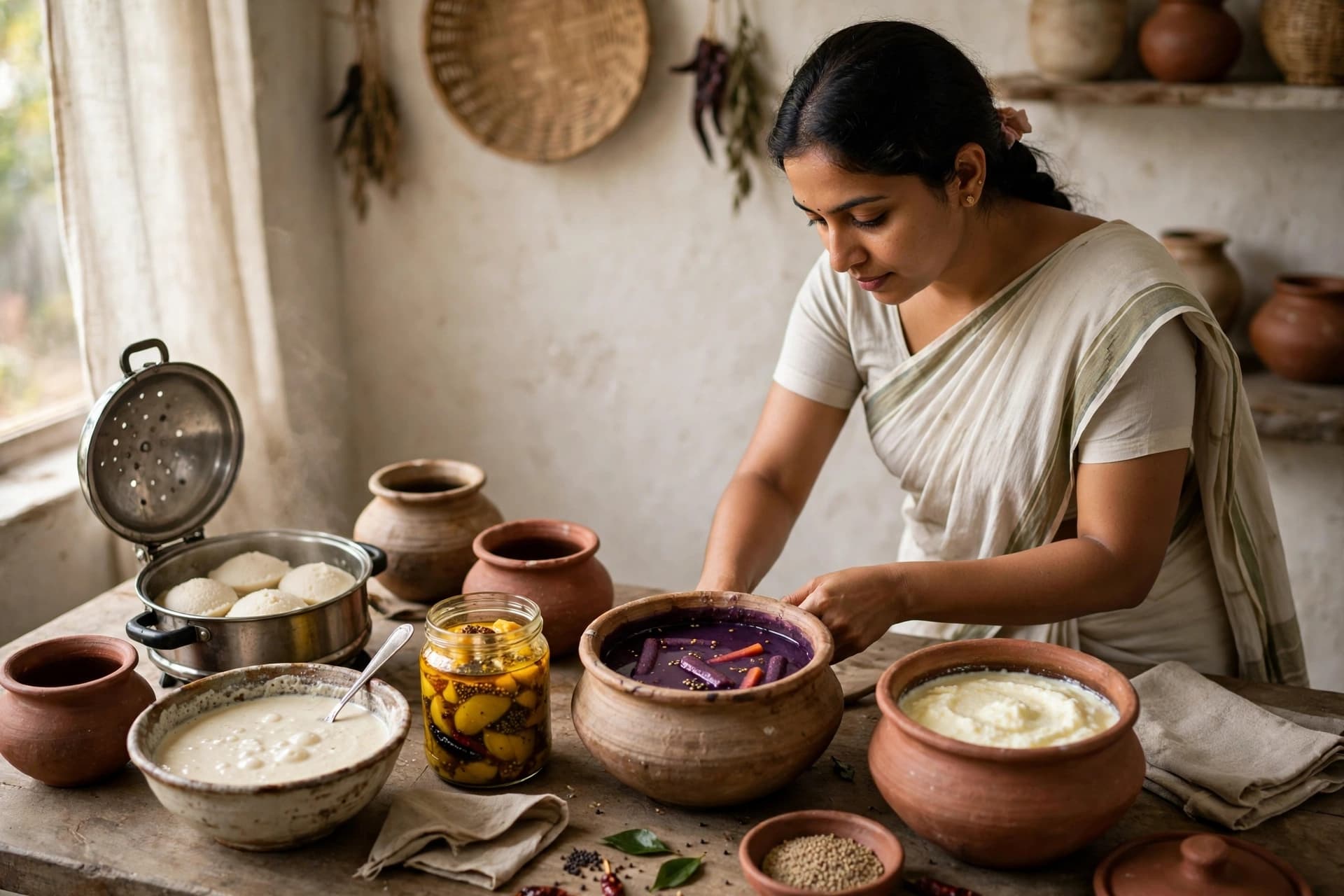
Fermentation is a natural process in which friendly microorganisms, such as bacteria and yeasts, transform the sugars and starches in a food.
The result is a gentle sourness, a new aroma and often a softer texture. For generations, families across India have used it to keep food from spoiling, to add flavour and to make everyday meals more satisfying.
A bowl of curd at lunch, a batter left to rise overnight and a jar of pickle on a sunny windowsill all belong to the same quiet tradition. These are not new trends. They are part of how India has always cooked and eaten.
Foods our families already eat
Here are some much-loved fermented foods from across the country, and how they are traditionally enjoyed.
Curd (dahi): Set at home with a spoonful of yesterday’s curd. Eaten with rice, alongside parathas, or as a cooling side to spicy dishes.
Chaas and buttermilk: Curd thinned with water and often flavoured with cumin, curry leaves or salt. Usually taken with or after a meal, especially in warm weather.
Idli and dosa batter: Rice and lentils ground and left to ferment overnight. Steamed into idli or spread thin for dosa, and served with sambar and chutney.
Dhokla: A soft, steamed Gujarati snack made from fermented gram flour or rice and lentil batter, eaten with chutney at breakfast or tea time.
Handvo: A savoury Gujarati cake of fermented rice, lentils and vegetables, pan cooked or baked and served with tea or a meal.
Appam: Fermented rice batter cooked into a lacy-edged pancake with a soft centre, popular in Kerala and Tamil Nadu and often served with stew.
Kanji: A tangy drink of carrots and beetroot with mustard seeds, left to ferment for a few days and served chilled, especially in North India.
Pazham kanji (fermented rice water): Cooked rice soaked overnight and eaten the next morning with shallots, green chilli or pickle. Known by other names in Odisha, Bengal and beyond.
Traditional pickles: Vegetables or fruit preserved in oil or brine with spices. Taken in small amounts to add flavour to rice, roti or curd rice.
Gundruk and bamboo shoot: Fermented leafy greens and bamboo shoot, cherished in the North East and Himalayan communities, used in soups, chutneys and curries.
Fermented fish and soybean: Preparations such as akhuni and tungrymbai, used in certain North Eastern communities to give stews and chutneys a deep, savoury taste.
Kefir, kimchi and sauerkraut are well known elsewhere and follow the same idea of a tangy, fermented food served alongside a meal. Indian kitchens simply have their own long and varied list.
What the research says
Some fermented foods contain live bacteria, and curd and kanji are commonly eaten for gut comfort. Research into their health benefits is still developing, and the findings vary between foods and between people.
It is also worth knowing that not every fermented food keeps its live cultures. Cooking, baking or pasteurising usually removes them. Idli, dosa and dhokla are valued for their taste and digestibility, but they should not be thought of as probiotic foods.
Tips for enjoying them
Start small: If these foods are new to you, begin with modest portions and increase gradually.
Choose well: Look for fresh, properly stored homemade foods or trusted brands.
Read the label: On packaged versions, check for added sugar and salt.
Mind the salt and oil: Pickles and some fermented foods can be high in salt or oil. If you are watching your salt intake, a small amount adds plenty of flavour.
Ferment safely at home: Use clean jars, utensils and hands. If anything smells or looks off, throw it away.
Listen to your body: Notice how you feel after eating them, and adjust to suit you.
Who should check first
Fermented foods may not suit everyone. Please speak with a doctor or registered dietitian before adding them to your meals if you have a weakened immune system, are pregnant, are sensitive to histamine, live with a digestive condition, or have kidney or blood pressure concerns.