
Festive Season Without Weight Gain: A Navratri and Diwali Survival Guide
12 Oct 2026
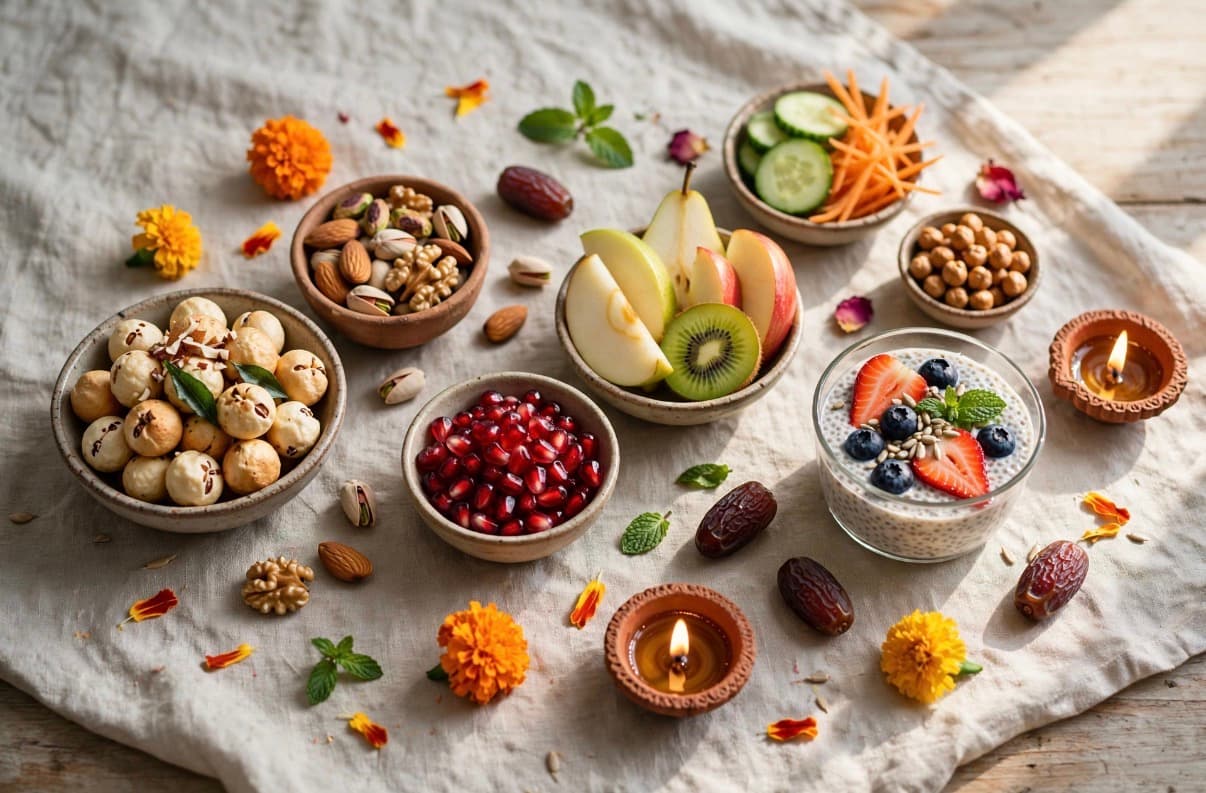
Navratri and Diwali bring out the best food cravings – fasting platter, family sweets and platters of hot and crisp snacks. All you need to do is ensure they don’t pull you in opposite directions, by following a few simple hacks which will keep your energy levels stable, your appetite satisfied, and your mind on the festivities.
Navratri: Fasting Foods To Fulfil Your Cravings
Navratri fasting is a personal choice, with some family members observing it religiously, others having light meals and a few choosing not to fast. All are valid options, and if you have diabetes / thyroid issues, are pregnant or have other medical conditions, always consult your doctor before deciding to fast.
When it comes to fasting foods, the traditional staples offer more variety than you might expect. Sabudana, kuttu, singhara, samak rice and potatoes will keep your energy levels high, while fruits, curd, paneer, makhana, and nuts add freshness, protein and crunch.
The drop in energy levels often experienced is due to meals consisting of mostly starches. To avoid this, simply follow a simple guideline for the fasting days – aim to incorporate protein (curd, paneer, peanuts or makhana), fibre (fruits or veggies like lauki, pumpkin and cucumber) and fluids (water, buttermilk, coconut water and lemon water) into every meal. A sabudana khichdi made with peanuts and served with a side of curd will keep you feeling full for a lot longer, than sabudana alone.
Diwali: Tips To Enjoy Sweets And Snacks During The Festive Season
Nothing says ‘Diwali’ quite like mithai. And for Diwali, there really is no need to apologize for any indulgences. A few simple hacks will actually help you enjoy your treats even more.
Go for your favourites – pick the 2 – 3 sweets you look forward to all year and skip the rest.
Share them – a piece of kaju katli or a gulab jamun can be shared with the person sitting next to you
Enjoy them with a meal – sweets are best had after lunch or dinner, rather than on an empty stomach, as they can lead to a crash later.
Go for lighter snacks with a difference. Add a chutney, salad or fruit bowl to your platter of chakli, samosa and namak pare, and give your system a break in between.
Have simpler meals on quieter days – dal, sabzi, roti and curd on less festive days, will keep your system running smoothly.
Everyday Hacks
All the tips above are optional, and should be used as a guide only. Fasting or otherwise, you should always listen to your body’s needs.
But here are a few simple changes that could help throughout the festive season.
Hydration – keep a water bottle handy at all times, and remember that coconut water, nimbu pani, buttermilk and herbal teas also count.
Sleep – late nights are a Diwali staple, but on less eventful nights, a regular bedtime will help you recharge for the next day
Walks – take a walk with the family after meals to aid digestion and help pass the time.
Festive Meal Ideas To Enjoy Without Overdoing It
The following are just a few ideas to get you started. Use them as guidelines and a basis for experimentation. Always listen to your body and use your judgement to decide what and when to eat.
For Navratri
Breakfast: kuttu cheela with curd and mint chutney, or a fruit bowl with curd and a handful of nuts
Lunch: samak rice pulao with veggies and lauki raita, or singhara roti with paneer bhurji and cucumber salad
Snacks: roasted makhana, sweet potato chaat, fruit chaat with lime, or dates with almonds
Dinner: sabudana khichdi with peanuts and curd, or pumpkin sabzi with kuttu roti
Something sweet: makhana kheer, lauki kheer or a date and nut laddoo
For Diwali
A festive lunch: dal, a seasonal sabzi, roti and a bowl of curd, followed by one piece of your favourite mithai
A light dinner: moong dal khichdi with a spoonful of ghee, alongside palak sabzi or a salad
The snack table: roasted chana, murmura chivda with peanuts, and a fruit platter of pomegranate and apple, beside the chakli and namak pare
Sweets to savour: besan laddoo, anjeer or khajur rolls, coconut barfi, kaju katli or soan papdi, whichever you love most
Drinks: masala chai, jaljeera, a small glass of thandai or fresh nimbu pani
Balance, Not Strict Control
A few days of festive indulgence won’t derail your year. It’s what happens over the course of the entire year that matters most, rather than a single day or even week. If you have a heavy meal one day, simply resume your healthy habits the next, rather than trying to make up for it with multiple days of extreme restriction. Enjoy your meal, share it with the people you love, and move on.