
Gut & Digestive Wellness: 7 Simple Ways to Beat Bloating
15 Oct 2026
Gut & Digestive Wellness: 7 Simple Ways to Beat Bloating
Bloating is a common complaint for most. That uncomfortable bloated stomach which makes you feel that your jeans size has been changed. However, you can prevent such an occurrence by making a few changes in your lifestyle. This article lists down some easy to follow remedies which would help you deal with bloating, none of them are compulsory. You can pick and choose the ones that suit you.
1. Eat slowly and chew properly
When you chew your food quickly and without proper chewing, you tend to swallow more air which is one of the main causes of bloating. You also swallow larger chunks of food that are difficult for your stomach to process. A very simple solution to this is to put the fork down after every bite and let your body do its work. In fact, most of us chew our food less than what we should.
2. Stay hydrated
Yes, you read that right. Drinking enough water can prevent bloating as well. Drink enough water throughout the day and you will see a change. Hydration is also crucial to help your system process the food that you eat. You can also opt for foods that are high in water content. Some of the best examples are cucumber, watermelons, oranges, celery, and soups. Warm water and herbal teas are also very effective. Peppermint, ginger, and fennel teas are some of the popular herbal teas that are effective against bloating.
3. Go for a walk after meals
A walk after your meal is an excellent way to keep bloating at bay. You need not go for a long-tiring walk.
A short walk of 10 or 15 minutes can also do the trick. You can take a walk around the block, have your phone with you and text while walking or even do some chores while you are at it. Standing while you do your chores is better than sitting on the couch after your meal.
4. Avoid fizzy drinks and salty foods
Sugary fizzy drinks and alcohol should be minimized as much as possible. If you love carbonated beverages, you can have them in moderation. Same goes with salt; a high-salt diet can cause bloating due to the water retention that it causes. The main sources of salt in our diet are takeaway meals, processed foods, deli, canned vegetables, instant noodles, and salted nuts. You can reduce salt in your diet by minimizing processed and canned foods. You can also rinse canned vegetables and beans before adding them to your meals.
5. Keep a food diary
Certain foods are notorious for causing bloating and gas. You can keep a food diary and track which foods cause you discomfort. Keeping a food diary would help you avoid such foods and know which foods to eat in smaller portions.
Some of the foods that cause gas and bloating are:
• Bean Sprouts
• Chickpeas and lentils
• Broccoli, cauliflower, cabbage, and Brussels sprouts
• Onions and garlic
• Apples, pears, and peaches
• Milk, ice cream, and cottage cheese
• Sugar-free gums and candies
• Whole grains and bran
You can also try eating smaller portions of the foods that cause you discomfort and cook them in different ways. For example, you can cook vegetables instead of having them raw or soak dried beans overnight before you cook them. You can also keep track of things that you eat on days when you experience bloating. With time, you would discover which foods are responsible for your bloating. Some people tend to be more sensitive to certain foods than others.
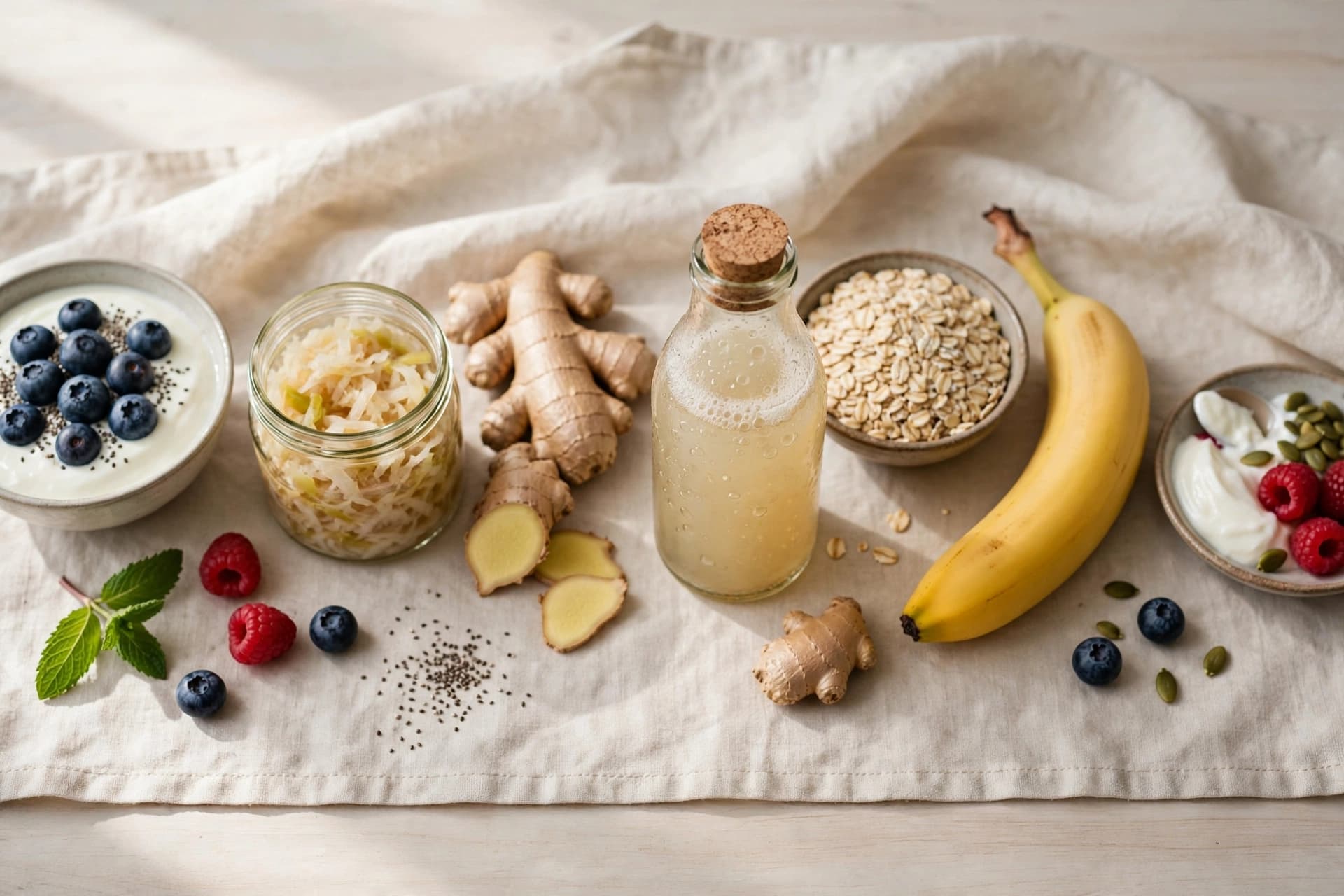
The foods that are less likely to cause bloating are bananas, oats, plain rice, potatoes, carrots, zucchini, spinach, kiwi, papaya, pineapple, eggs, chicken, fish, and yogurt. You can also try adding ginger to your meals and drinks. Ginger helps in reducing gas and bloating. These foods do not have a magical effect on everyone, but they are generally healthy and are effective against bloating.
6. Manage your stress
Your stress levels are directly related to how well your stomach works. When you are stressed, your gut functions improperly, and you are more likely to experience bloating. Although you cannot do away with stress, you can certainly take steps to minimize it. You can practice deep breathing, take short vacations, listen to music, or take a walk. Try not to work while you eat, especially at your desk. If you are always busy, you can take short breaks in between to destress yourself.
7. Do not skip meals
Skipping meals can lead to bloating. You might eat a big meal in the evening if you have skipped breakfast in the morning. Eating large meals can also cause bloating. It is, therefore, important to have regular meals throughout the day so that you do not have to eat very large portions at one time. Having a healthy snack in between meals can also be helpful and satisfying. You can have some nuts, banana with peanut butter, or a small portion of yogurt as a healthy snack.
The remedies mentioned above are suitable for people who have occasional bloating. They are not an ultimate solution for chronic bloating; consult your doctor for the best medication. Chronic bloating can be a symptom of various illnesses like IBS or cancer. It is, therefore, important to seek professional help if you are bloating consistently or if you have other worrying symptoms like weight loss and blood in the stool. Most of us experience occasional bloating and can overcome this discomfort by making a few minor changes to our lifestyle.
A walk after lunch, a smaller portion of food, and an occasional walk can do wonders for our stomachs.