
How to Eat Well When You're Traveling
30 Oct 2026
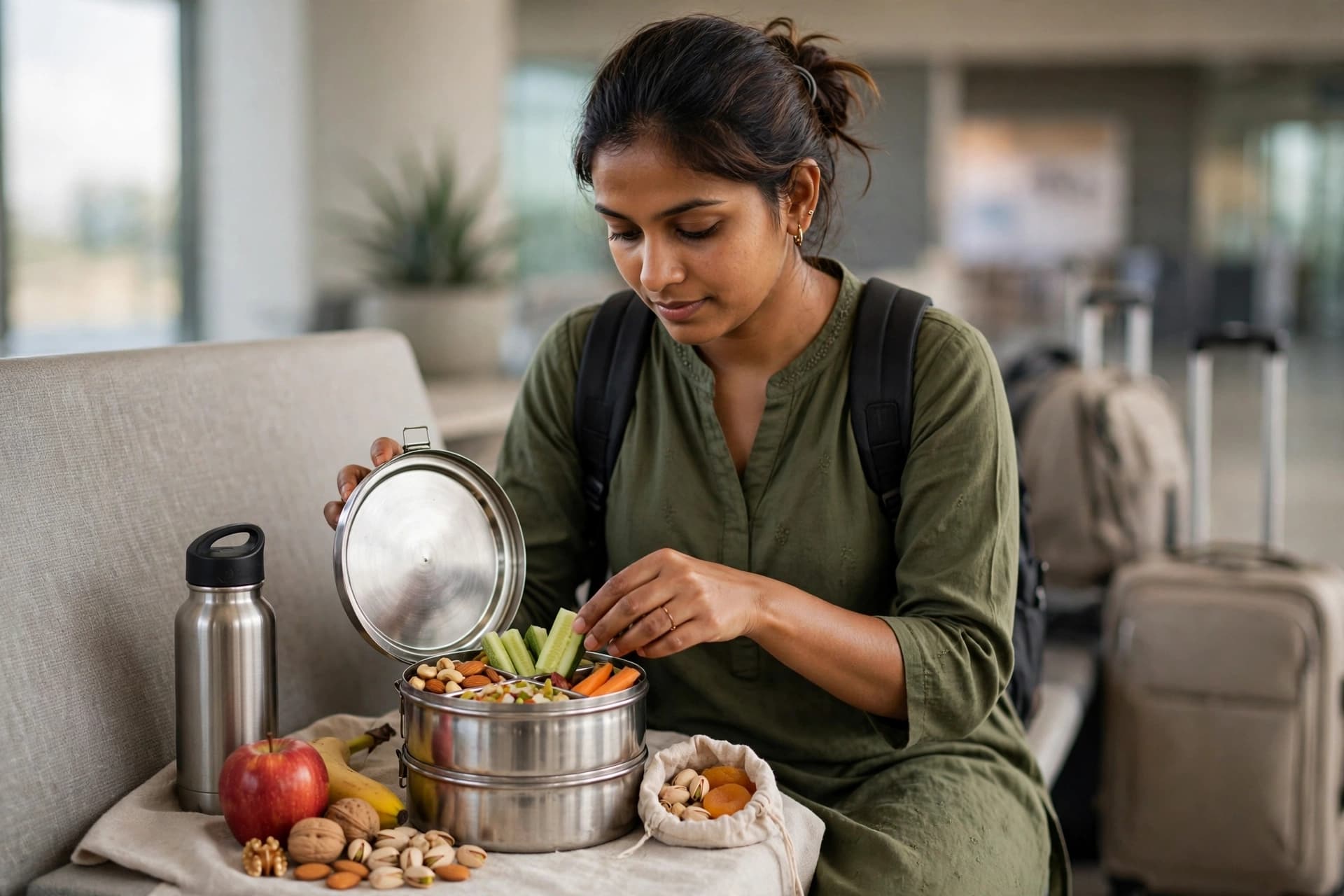
Why you may make changes to your eating patterns while traveling
Whether you are travelling for work or play, you will experience changes to your usual eating pattern by missing meals, irregular sleeping patterns and not having access to your usual foods.
Your goal is to feel well and enjoy your travels. You do not need to stick to a strict eating pattern, although eating local food is a huge part of making your trips memorable. You can make a few simple changes to keep you feeling comfortable.
Before you travel
Take a small bag of snacks to help you on your long days. Choose foods that are easy to transport and do not require refrigeration:
Roasted chana, makhana, nuts, seeds and dried fruit
Khakhra and thepla
Fruits that are firm and not likely to bruise such as apples and oranges
Homemade snacks in an airtight container
A reusable water bottle to keep you hydrated.
Whilst traveling
Simple foods are usually easy to find at airports, train stations and motorway stops. Foods such as idli, upma, poha, dahl, rice, roti and sabzi, curd, fruit, vegetable/egg sandwich, buttermilk, coconut water and plain lassi are all easily found. Try to have a combination of filling foods with a source of protein or fibre (curd and poha / dahl and rice).
Look for foods that look freshly made and busy stalls.
During long journeys
Have small meals/snacks regularly to avoid getting too hungry.
Drink plenty of water throughout your journey.
Avoid overly salty, greasy and sweet snacks. These can leave you feeling thirsty and sluggish.
Try to stretch or walk whilst on your journey.
Once you arrive
Try the local specialties. Sharing food is a great way to try more of everything. Often having small portions of rich foods is enough. Try to have vegetables, dahl, curd or fruit with your meals.
Hotel breakfasts can be simple but very satisfying. Eggs, idli, fruit, curd, porridge and poha with nuts all work well.
If traveling for work or conferences, having a snack in your bag will help. Don’t miss out on meals before long meetings and try to avoid caffeine later in the day.
Digestive issues
Changes to your routine, less water and sitting for long periods can cause you to become constipated or bloated. Try to eat more fibre-rich foods (fruit, vegetables and wholegrains), drink plenty of water and have some physical activity during the day.
Many people find traditional foods like curd rice, buttermilk and jeera water comforting. These are familiar foods that are easy to eat. However, they do not treat any conditions.
Safe foods
Choosing safe foods whilst traveling can be done with a few simple choices:
Choose freshly cooked hot foods.
Avoid uncooked salads, cut fruits not covered, ice and street foods.
If unsure about the tap water, use sealed or safe treated water to drink. This includes using it when brushing your teeth.
Those that are pregnant, elderly, very young or immune compromised should be extra cautious.
Changing time zones can affect your sleeping and hunger. Try to get some daylight in whilst you’re there to help your body adjust. Drink plenty of water, have minimal amounts of alcohol and caffeine and try to eat at the local times gradually. There is no food that will help with jet lag so be patient with yourself for a few days.
Common Myths
Myth – You should miss out on meals whilst traveling. Fact – Having regular meals/snacks will usually make you feel more stable.
Myth – Detox teas will help with bloating from traveling. Fact – Usually bloating will settle with plenty of water, fibre, physical activity and time. You do not need detox teas.
Myth – All packaged foods are unhealthy. Fact – Packaged foods vary massively. Plain nuts, roasted chana and dried fruits are all easy to take with you.
Myth – You won’t be able to eat healthily whilst eating out. Fact – Most menus will have options to create a healthy meal. Rich foods should be enjoyed occasionally.
Travel friendly foods
Roasted chana – Eat as is. Store in a dry airtight container.
Makhana – Eat plain or lightly roasted. Store in an airtight container to keep them crisp.
Nuts and seeds – Eat in handfuls. Store in a sealed pouch away from heat.
Dried fruits – Eat as is or with nuts. Store in a small box.
Khakhra – Eat plain or with curd/chutney. Keep flat and dry to stop them breaking.
Thepla – Eat cold or at room temperature. Best eaten within a day. Store in a clean container.
Apples and oranges – Eat whole. They are good to take in a bag.
When to see a medical professional
If you are vomiting, have diarrhea, a fever, blood in your stools or are showing symptoms of dehydration (dizziness, very little urine) then please see a medical professional. If your symptoms are severe or lasting longer than a short period of time don’t wait for them to go away.
Speak to a professional
If you have diabetes, kidney issues, food allergies, digestive issues, are pregnant or have other medical concerns please speak to a doctor or registered dietitian. If you take regular medication then ensure you take this with you and follow your doctor's advice.