
How to Sequence festive feast to blunt glucose spikes
8 Oct 2026
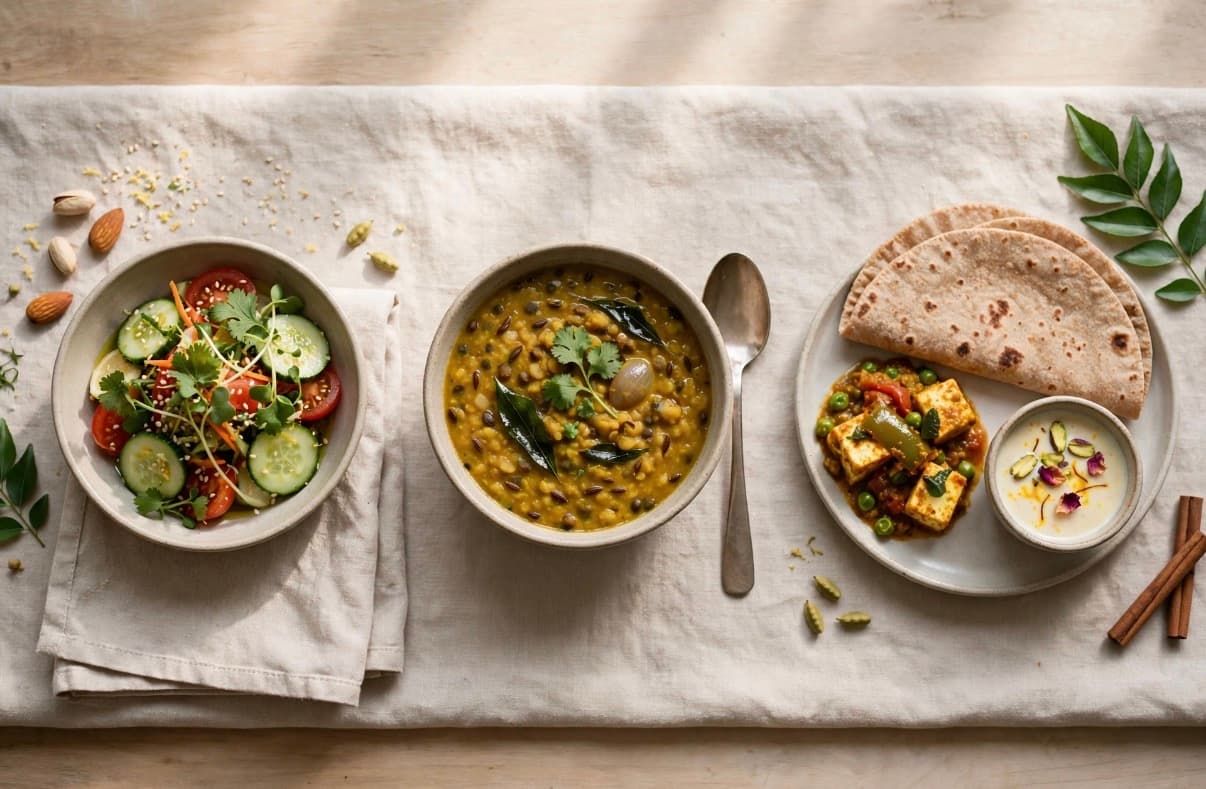
The thali is loaded, the mithai is waiting. Most of us would eat this in whatever order the plate arrives: rice, roti, sweets and maybe some salad if there is space left. Eating too many refined carbs and sweets triggers a sharp blood sugar spike and then a crash, leaving you lazy, moody and craving more sugar. It turns out that the order may matter. Some small studies suggest that eating vegetables and protein before carbohydrates may lower the post-meal blood sugar rise, compared to the same food eaten in reverse. Same food, smarter order. The good news is, metabolic balance does not require you to skip your favorite holiday foods or subsist on plain steamed vegetables. By changing the order in which you eat what is already on your plate, you can blunt post-meal glucose spikes by up to 50 to 70 percent, sustain your energy and celebrate without metabolic remorse.
Why sequence matters
Fibre, protein and fat slow down how quickly your stomach empties and how fast sugars enter your bloodstream. Carbohydrates eaten afterwards are absorbed more gradually, which can mean a gentler rise and a smaller crash. Carbs on an empty stomach do the opposite: a quick spike and then a dip, followed by fatigue and cravings.
Altering the sequence changes your internal transit :
Fiber first creates a viscous gel-like mesh along the mucosal walls of the small intestine, slowing gastric emptying and delaying enzymatic glucose absorption.
Protein and fats second trigger satiety hormones notably GLP-1 (glucagon-like peptide-1) and cholecystokinin (CCK). These hormones signal fullness to the brain while further slowing the rate at which the stomach releases its contents.
Carbohydrates and sweets last land in an already active digestive matrix, transforming what would have been an abrupt spike into a gentle, sustained curve.
Festive Plating Sequence
Start with Fiber :Begin your meal by filling at least a quarter to a third of your plate with fiber-rich vegetables. Whether it is a spiced kachumber salad,sprouted moong salad or cucumber and radish slices, eating these first lines the gastrointestinal tract and lays the groundwork for steady glucose absorption.
Follow with Proteins and healthy fats :Paneer tikka, Grilled paneer, fish or chicken, thick dal, tofu, or a serving of hung-curd raita. Protein takes longer to break down into amino acids, ensuring your appetite stabilizes and preventing rapid overeating.
Then follow with moderate portion carbohydrates :Once your fiber and protein buffer is in place, plate your main carbohydrates Roti, Rice, Pulao or parathas.
Mithai at the end : one small piece after a full meal causes a smaller spike than on an empty stomach.
Health and celebration can coexist harmoniously when guided by simple physiological awareness. By leading with fiber, protein and savoring your carbs and sweets at the end, you protect your energy, curb cravings and support your gut health. You get to honor the richness of tradition and togetherness leaving sluggishness behind and stepping into the season feeling balanced, energized, and vibrant.