
Jaggery, Honey, Stevia & Monk Fruit – How do they compare?
9 Nov 2026
Why this is a popular topic
With lots of people looking to cut down on their sugar intake, there can be confusion around what is the best sugar alternative. Jaggery, honey, stevia and monk fruit all have different promises. Often traditional sweeteners are thought to be healthier.
This post will help explain how each compares. However, health depends on the individual, quantity and overall diet. We are simply trying to give you the information so you can understand how they compare.
What is each sweetener?
Below you can see a simple breakdown of what each sweetener is, commonly used for and one thing to consider.
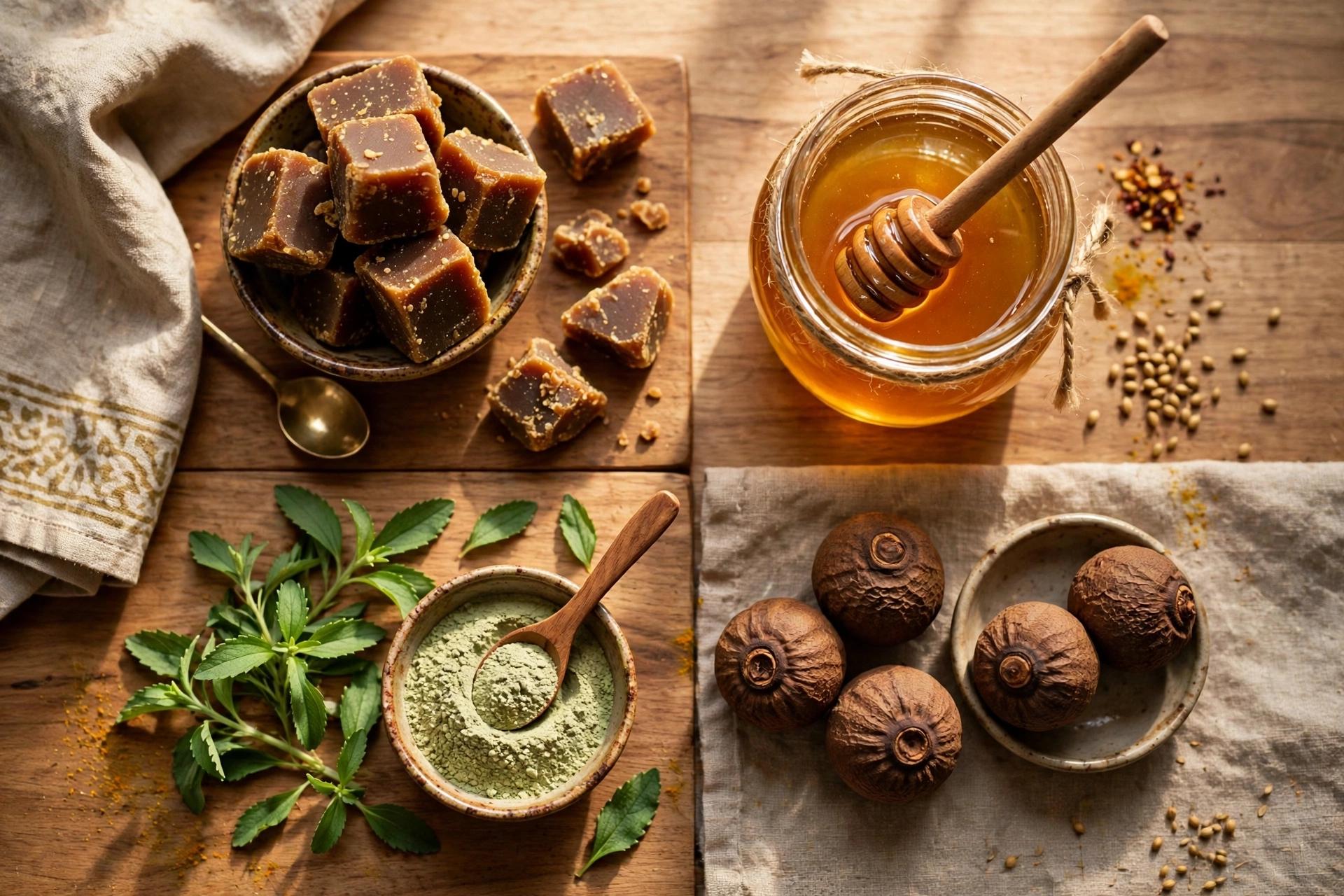
Jaggery (gur) – This is made by boiling down the sap of sugarcane or palm. It contains small amounts of minerals such as iron and potassium. It can be found in chikki, ladoos, tea, sweets and many winter foods. The amounts of minerals are very small so it isn’t a significant source of nutrients. It is mainly still a sugar and our body will process it very similarly to table sugar.
Honey – This is a natural sugar with trace elements. It has a strong flavour and can be commonly found in hot drinks, marinades and homemade remedies. It is still sugar and doesn’t offer huge benefits. It shouldn’t be used for infants under one year old. Raw or unlabeled honey can be adulterated so it is important to buy from a trusted source.
Stevia – This is a zero calorie sweetener derived from plants. It is much sweeter than sugar and can be found in tea, coffee and packaged drinks. Some people find this has a slight aftertaste. Many products will contain a mixture of sweeteners or fillers alongside stevia so be sure to check the ingredient list.
Monk Fruit (luo han guo) – This is a zero calorie sweetener derived from fruits. It can be found in drinks and sweeteners. This is a newer sweetener and research is still being carried out into long term effects. Often it will be mixed with other ingredients.
There are other sweeteners such as dates, date syrup, coconut sugar, brown sugar and artificial sweeteners. Just because they are natural or unrefined does not mean they are a free food. Some sweeteners also have mixed or ongoing research.
What does the research say?
It is best to keep your added sugars low in your overall diet. None of the alternatives will counteract eating large amounts of sweet foods. All of these sweeteners will add sugar.
Zero calorie sweeteners add sweetness without adding any calories. Research is ongoing into long term effects on appetite, cravings, gut health and weight management. Results can vary from person to person.
A positive thing to take from this is often your taste buds can adapt over time. As you are reducing your overall sweetener usage foods often begin to taste sweeter. For many people it is a realistic goal to reduce the overall amount of sweetness they are consuming.
How to reduce your sugar intake
Often small changes to your food will help. You can continue to enjoy traditional sweet treats but try to eat them in smaller amounts. Please be mindful that the terms sugar free, no added sugar and natural do not mean they are healthy.
Use ripe bananas, dates or mashed fruits to sweeten your porridge and baking.
Add warming spices such as cardamom, cinnamon and nutmeg.
Check labels for added sugars – this can be found in syrup, dextrose, maltose and concentrate.
Be mindful of sugary drinks and packaged snacks.
Enjoy your festive and family sweet treats in small amounts.
Try to reduce the amount of sweetener you use in your tea, coffee and desserts.
Who should check
If you have any health issues such as diabetes, pre-diabetes, PCOS, kidney issues, digestive issues (IBS), phenylketonuria or other medical concerns it is best to seek personal advice. Please consult your doctor or registered dietitian to see which sweeteners are suitable for you. Jaggery, honey and dates will all increase your blood sugar.
It is best to talk to your paediatrician regarding sweeteners for children. Some sugar alcohols and mixed sweeteners can cause bloating or loose motions in some people.
Myths & Facts
Jaggery is healthy – Whilst it does contain small amounts of minerals it is still mainly a sugar and is processed similar to table sugar.
Honey is safe for diabetics – Honey is a sugar and will increase your blood sugar. Please consult your doctor/dietitian.
Stevia and monk fruit cause cancer – There isn’t a good reason to worry about this. Research is ongoing into long term use. To be honest we are finding out more.
Research is mixed. Just because you are removing calories from a drink doesn’t mean you will change your overall diet. Results can vary.
Brown sugar is healthier than white sugar – The difference is minimal. They are both sugar and are counted as added sugar in your diet.
Research is always evolving in this area so be cautious of any claims. Don’t be tempted to believe anything that makes big claims about huge benefits or risks.