
Managing Blood Sugar through Daily Eating Habits
15 Oct 2026
Managing Blood Sugar through Daily Eating Habits
Introduction
You know that feeling when it's 3pm and you feel suddenly tired, unfocused and raid the nearest snack cupboard? For many of us it has little to do with lack of sleep and more to do with what we ate hours ago. The good news is that you don't need to embark on a strict diet or start weighing your food to feel better. There are simple changes you can make to your daily diet that will improve how you feel without going hungry or depriving yourself. Here's what has helped me, and what I think will help you.
Avoiding carbohydrates is not the solution
Diets rich in carbohydrates such as rice, roti, fruits, and potatoes are not inherently bad. However, eating them in isolation can cause a sudden spike in blood sugar. It is best to eat carbs along with some protein or healthy fats or fibre. For instance, an apple with peanut butter or eggs with the roti instead of jam or a dal, rice and vegetable combination instead of plain rice with a heavy curry.
Eating the right foods in the right order helps
A popular strategy is to eat the protein and the vegetables first and save the carbs for later. So, have the salad, sabzi and dal before the rice and roti. This is a simple change that does not require any special effort. There is no scientific evidence to base this strategy on but many people find that it works for them and helps them feel full for longer.
Cut down on sugar laden beverages and junk food
Sugary beverages such as soda, packaged juice, sweetened chai, energy drinks and specialty coffees are loaded with sucrose or HFCS which enter the bloodstream within 2 minutes of consumption. Similarly, junk foods such as biscuits, chips, pastries and candy also have a very high glycemic index. Both lead to a rapid rise and fall in blood sugar levels making you feel tired and craving sugar after an hour or so. Try reducing your consumption of these items by even one per day as a start.
Stick to regular mealtimes
Skipping meals for long periods and then binge eating later in the day is not a good strategy. It is best to stick to regular mealtimes and have a small snack if you feel hungry. Again, there is no science behind this, but it makes intuitive sense. You are less likely to feel extremely hungry and gorge on unhealthy foods if your meals are spaced out evenly throughout the day.
Go for a walk after meals
A walk after meals is an excellent way to lower blood sugar. Even ten minutes of walking after a meal can help. You can also multitask and walk while talking to a friend or having a phone conversation. The idea is to get gently active after you have eaten.
Simple daily strategies that can make a difference
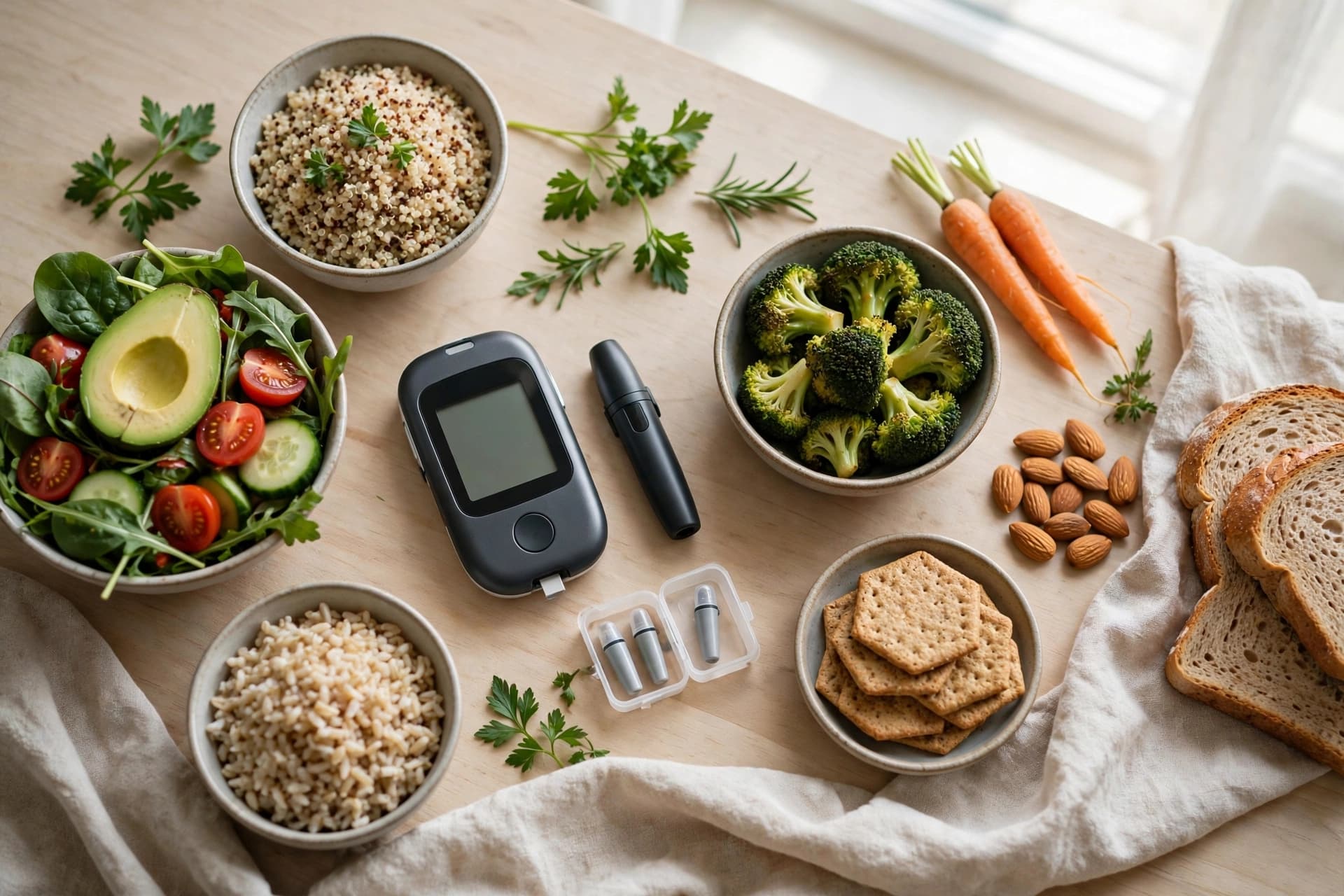
Eat protein with each meal to help you feel full for longer. Good sources of protein include eggs, paneer, tofu, fish, chicken, curd, Greek yogurt, lentils, chickpeas, rajma and sprouts.
Eat more vegetables such as spinach, broccoli, cauliflower, cabbage, okra, beans, cucumber, tomatoes and carrots. Include leafy greens in your daily diet.
Have whole grains such as oats, brown rice, whole wheat roti, ragi, jowar, bajra, barley and quinoa.
Eat more fruits like apples, pears, guava, berries and oranges. Try to eat them whole instead of in juice form.
Increase your intake of nuts and seeds such as almonds, walnuts, peanuts, chia seeds, flax seeds and pumpkin seeds.
Healthy fats such as olive oil and avocado are also important. Nuts and nut butters are also a good source of healthy fats as long as they are free of added sugars.
Keep healthy snacks on hand such as roasted channa, makhana, boiled eggs, hummus and veggies, curd with seeds and a handful of nuts.
Drink more water, buttermilk, lemon water and unsweetened tea or coffee. Avoid packaged drinks as much as possible.
None of this is set in stone.
You don't have to give up rice forever or stop having your morning cup of tea. Focus on making one or two small changes that you can stick to, rather than big overhauls. Add something healthy to your breakfast, or go for a walk after dinner. See how you feel in a few days and a week. How often do you feel tired and crave snacks? How do you feel when you wake up in the mornings? Small changes can add up and the most important thing is to find what works for you and stick to it. I hope these tips help you get started.