
Nutrition after 60 – Key nutrients to support healthy ageing
2 Nov 2026
Changes with age
There are many factors to consider when looking at how your nutrition may change:
Reduced appetite/ taste
Your body might not be absorbing certain nutrients as well
Loss of muscle and bone mass
Some medications may impact your appetite or how nutrients are utilised
Dental issues, loneliness and reduced mobility can all make shopping for, preparing and eating food difficult.
There is still research being done in some of these areas and you may find your requirements are very different.
Key nutrients to include
Eat plenty of the following foods to support your health as you age. None of these will cure anything but can help:
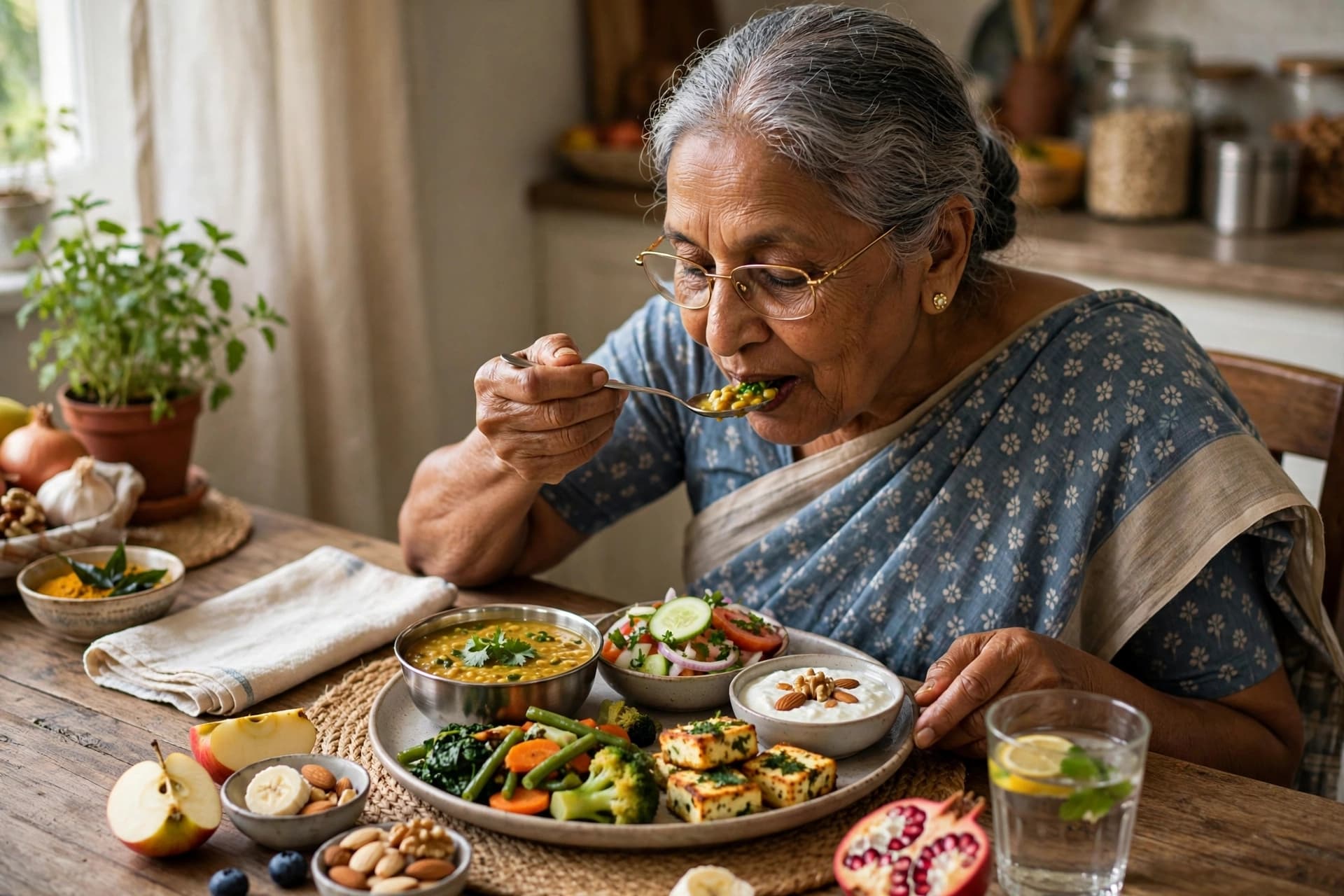
Protein – To help maintain muscle. Dals, eggs, paneer, curd, milk, fish, chicken, sprouts, soya and tofu. Try to eat smaller portions throughout the day. Moong dal khichdi, scrambled eggs, paneer bhurji, curd and dal soups can all be softer options.
Calcium – Milk, curd, paneer, ragi, sesame, almonds and leafy greens. Ragi porridge, sesame chutney or a glass of milk can be an easy option.
Vitamin D – Sunlight, eggs, fish and fortified foods. Many people in India lack vitamin D so it is best to get your doctor to check.
Vitamin B12 – Eggs, dairy, fish, meat and fortified foods. As we age we may struggle to absorb vitamin B12. Vegetarians and vegans are also at increased risk. Speak to your doctor to get tested and advised.
Fibre – Vegetables, fruits, oats, millets, wholegrains and pulses. Water, buttermilk, soup, coconut water and herbal teas. As we age we can struggle with thirst so increasing fibre can help. Increase slowly and ensure enough fluids.
Potassium – Bananas, oranges, coconut water, potatoes, leafy greens, beans and nuts. If you have any kidney issues or are taking certain medications please speak to your doctor first.
Healthy fats/Omega 3 – Nuts, flaxseeds, walnuts, fish. Cooking oils can be used in moderation. Try a few soaked almonds/walnuts or flaxseed mixed into curd.
Iron, Zinc and Magnesium – Lentils, spinach, methi, jaggery, pumpkin seeds, chickpeas, almonds and wholegrains. Palak dal, chana chaat or methi paratha can all easily be added into your meals.
Coloured foods – Carrots, papaya, pumpkins, tomatoes, amla and guava. Citrus fruits can all be enjoyed as ripe fruits, in salads, soups and sabzis.
Tips to eat well
Eat small, frequent meals if you have a low appetite.
Use lots of herbs and spices (jeera, ajwain, coriander, ginger and lemon) to flavour your food.
Eat softer foods if struggling with chewing or swallowing. Try khichdi, soup, mashed vegetables or sambar soaked idlis.
Try to eat with family or friends to make mealtimes more enjoyable.
Keep snacks simple and easy to access. Fruit, roasted chana, nuts or a glass of curd can all be good options.
Add extra goodness by adding curd, a little ghee, nuts or milk to your everyday foods.
Try to keep high salt, high sugar and processed foods to a minimum.
Stay active
Eating well is only one part of looking after your health. Light strength and balance exercises (with doctors approval) can help support your muscles. Getting outside in daylight, sleeping well and keeping in touch with family and friends can also help. Often this can make mealtimes more enjoyable.
For carers
You know the person best so you will be able to recognise any changes. If you notice any of the following please see your doctor:
Unintentional weight loss
Loss of appetite
Difficulty swallowing or coughing whilst eating
Signs of dehydration (very dark urine, dry mouth or unusual tiredness)
New confusion
Not interested in food/meals
Myths
They need to eat less – Often there is a reduction in appetite but their requirement for nutrients remains the same. Eating smaller nutrient dense meals can help.
They can take supplements instead of eating well – Eating a variety of foods will provide a range of nutrients that cannot be replaced by supplements. Any supplements would be a decision to make with your doctor.
It is normal for them to lose weight – Unintentional weight loss should be discussed with your doctor.
They shouldn’t eat any fats – We need some fat in our diets. Nuts, seeds, fish and cooking oils (in moderation) can all be included.
They just don’t have an appetite anymore – Whilst this can be common it can also be a sign of something that can be treated. Medications, dental issues and low mood can all play a part.
When to see a doctor
If you have diabetes, kidney issues, heart issues, osteoporosis, difficulty swallowing or dementia then please speak to a doctor or dietitian before changing your diet. Certain foods and nutrients can interact with medications such as blood thinners, thyroid medications and blood pressure medications.
Regular check ups and blood tests can help your doctor identify any deficiencies early.