
Perimenopause and Nutrition: Eating to Support Hot Flashes, Weight Changes and Sleep
30 Oct 2026
What is perimenopause?
Perimenopause is the period leading up to menopause and is where your hormone levels begin to change and symptoms may appear. It can happen at any time in your 40s, but varies greatly between individuals. Some women will notice changes over a number of years, while others will hardly notice any changes.
This is completely normal to go through at this stage in your life. No two women will experience this in the same way. While diet cannot prevent this process from occurring, it can help with how you feel.
Hot flushes
Different triggers can cause hot flushes. Some women find that caffeine, alcohol, very spicy food or large heavy meals can trigger them, whereas some find there is no correlation. Keeping a note of what you have eaten can help. Having regular meals and keeping hydrated can help some people.
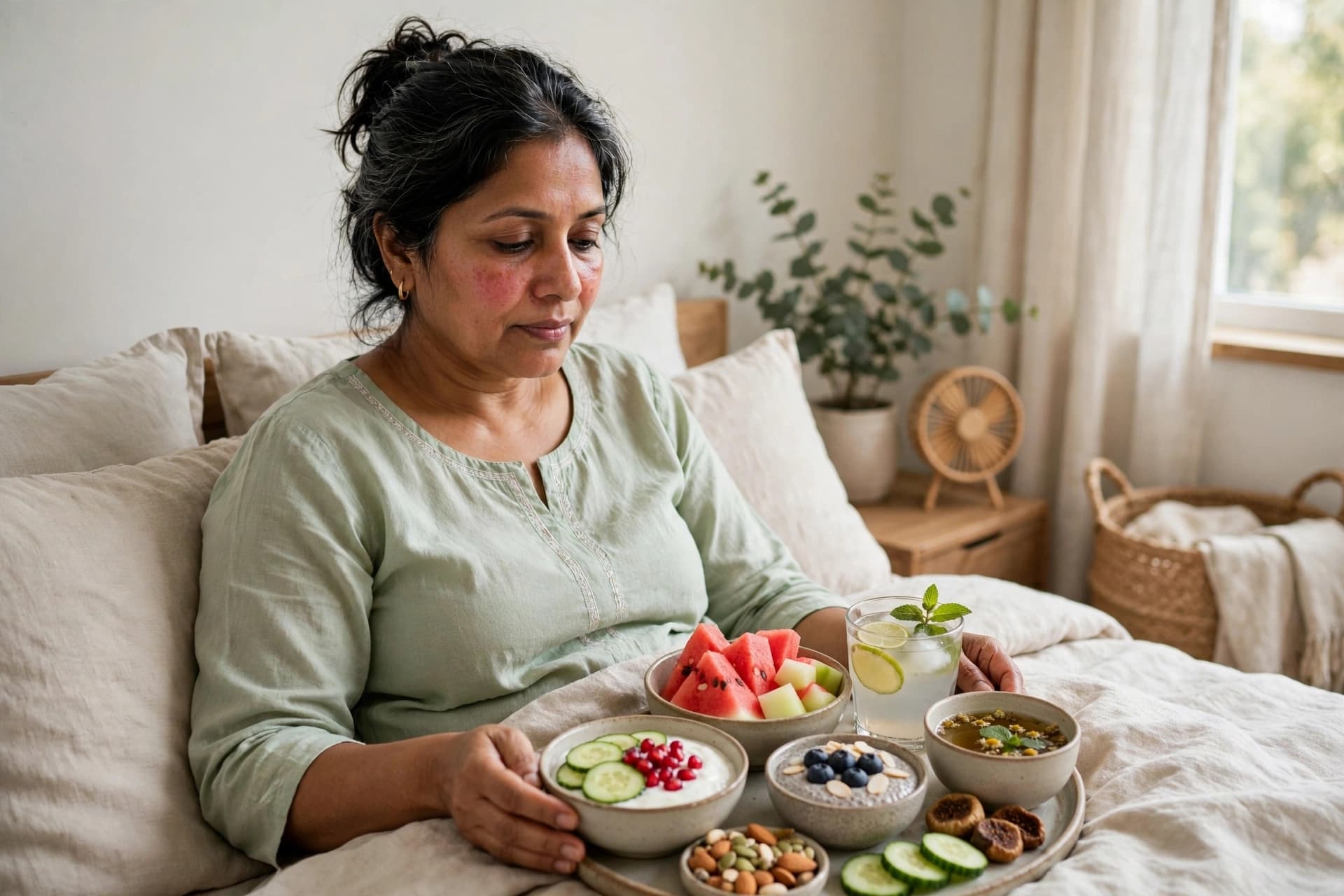
Eating lots of high water content foods like cucumber, watermelons and oranges can help. Buttermilk and coconut water can also help due to their cooling properties. Flaxseeds, soy, tofu, chick peas and sesame are often mentioned when talking about hot flushes. The research is not clear cut and results can vary so they should be seen as part of a balanced diet.
Weight and body changes
Your metabolism, muscle mass and fat storage can change with age and hormonal changes. It is common to experience changes in your weight and body during this time and is not a reflection of anything you are doing wrong. You want to be eating regularly to keep you feeling well.
Adding protein can help with maintaining muscle. Eat high fibre foods to keep you feeling full and aid digestion. Healthy fats from nuts and seeds can also help. Doing strength based exercise like using light weights, resistance bands or bodyweight exercises will help.
Sleep
While no food will help with sleeping, eating regularly can help. Try to avoid eating a heavy meal too late. Avoid caffeine in the afternoon. Foods high in magnesium like pumpkin seeds, almonds, spinach and bananas are easy to add into your diet. Having a nice warm glass of milk can be a comforting ritual.
Stress, screen time and night sweating can also impact your sleep.
Bone and Heart Health
During this time hormonal changes can impact your bone and heart health. Calcium rich foods include dairy products, ragi, sesame, leafy greens and almonds. Vitamin D can be found in a few foods but we often lack it. Speak to your doctor about having your levels checked. Oats, dals, nuts, seeds and fish are easy to add to your diet. If your periods become heavy or irregular, speak to your doctor about your iron requirements and anaemia.
Some foods to help:
Dal, chick peas and sprouts – in a dal, sabzi or salad.
Oats, millet and wholegrains – porridge, roti or khichdi.
Ragi – porridge, dosa or roti.
Flaxseeds and sesame – lightly toasted and added to meals.
Almonds and pumpkin seeds – small handful as a snack.
Spinach and leafy greens – in a dal, sabzi or paratha.
Curd, buttermilk and paneer – in meals or as a snack.
Eggs, fish, tofu and soya – in curries, grilled or stirfried.
Fruit – whole fruit like bananas, oranges and watermelon.
Myths and facts
Myth: You will gain weight during this time. Fact: It is common but not guaranteed. Eating regularly, having enough protein, doing strength based exercise and sleeping well will all help.
Myth: Soy is bad for menopausal women. Fact: Tofu and other soy products are commonly eaten and generally ok for most people as long as they are not eating excessive amounts of food. Research is still limited so if you have any breast conditions speak to your doctor.
Myth: Supplements can help balance your hormones. Fact: No supplements or foods can do this. Speak to your doctor.
Myth: Not eating will help you control your weight. Fact: Often this causes you to feel low in energy and overeat. It can also make sleeping and your mood difficult.
There is limited research on specific foods to help with perimenopause. There is no food or diet to cure symptoms.
When to see a doctor
If your symptoms are affecting you, speak to a doctor or gynaecologist. If you are having very heavy, long lasting or very irregular bleeding, bleeding after sex or in between periods, feeling persistently low, anxious or struggling to sleep then seek care asap. There are treatment options available and this is a decision for you and your doctor. If you have a history of breast conditions, thyroid issues, diabetes or other medical concerns then speak to your doctor/registered dietitian before making any significant dietary changes.