
Screen time and Snacking – helping children eat more mindfully
2 Nov 2026
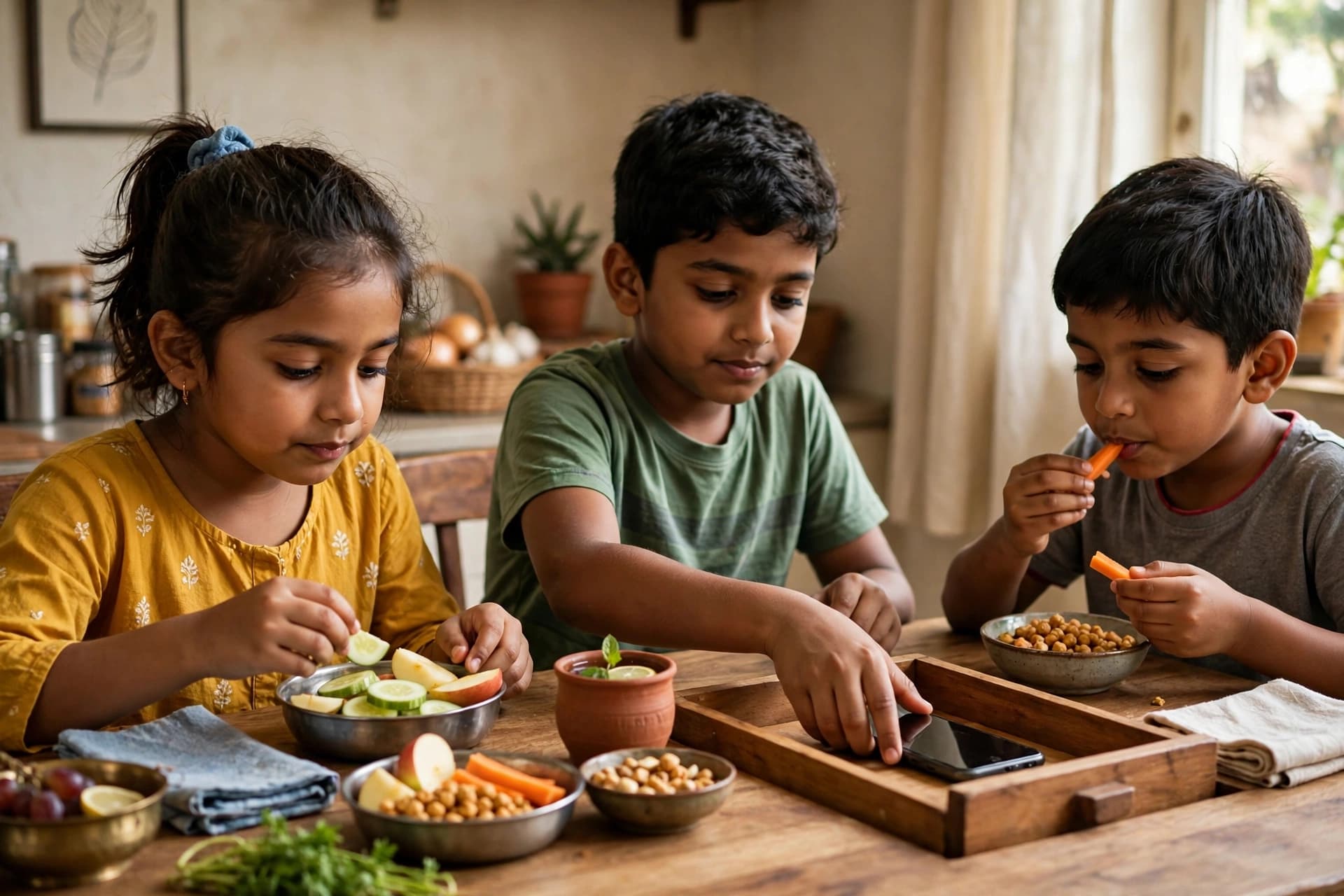
Screen time and Snacking
Screen use is a normal part of modern family life. Most families have situations where they are eating whilst watching the screen. Whether it be having a cartoon at teatime or a video whilst cooking dinner, this isn’t a fail in parenting.
This blog isn’t about enforcing rules, but giving some gentle ideas to help your child become more mindful of their appetite and enjoy their food.
Why screen time affects eating
When we have our attention on the screen, it can make us less aware of the subtle hunger and fullness cues we receive. Snacks can be eaten due to habit and boredom. When we have our hands in the bowl, we tend to just eat. Craving can also be an issue due to advertising and auto-play content. We see the food and suddenly we want it!
There are plenty of studies coming out on this topic and children can vary quite a bit. Eating occasionally whilst on the screen isn’t harmful. We are just trying to help your child become mindful of their food and how they are feeling.
Good Snack Ideas
These are great for eating without the screen. Most can be made at home:
Sliced fruit with a small bowl of curd
Cucumber and Carrot sticks with curd or hummus
Roasted Chana – small bowl with a little salt
Makhana – dry roasted, small bowl
Sprouts Chaat – fresh with tomato/onion and a squeeze of lemon
Boiled corn – warm with a little lemon and masala
Poha/Upma – small amount in a katori
Idli – cut into pieces with chutney/sambar
Besan Chilla – folded and cut into strips
Curd with fruit – small bowl with chopped seasonal fruit
Nuts and seeds – if they are old enough to eat these safely, small bowl
Ladoo’s/Chikki – homemade, small pieces.
Packaged foods like chips, namkeen, biscuits and sugary drinks are all a normal part of life. However they are very easy to overeat when we have our attention on something else. Especially when eating directly from the packet.
Sometimes we can get thirsty and mistake this for hunger. Provide drinks nearby. Water, buttermilk, coconut water and plain lassi are all great options.
Gentle Tips
Eat wherever possible. Try to eat without screens during main meals.
Provide snacks at the same time and place. Put in a bowl/plate.
Provide the snack before screen time.
Provide a small amount in a bowl. Pair with something more filling such as protein/fibre. An easy option is apple slices with curd.
Ask how they are feeling in their tummy rather than telling them how much to eat.
Involve them in choosing/snacking.
Have a fruit bowl on show.
Lead by example and put your phone away.
As a family, you can create simple screen time routines. It is better to make small changes. Choose one tip to try for a few weeks and then add another.
Eating due to emotions
Children can snack due to boredom, tiredness, stress or excitement. This is completely normal and adults do this too. It can help to acknowledge how they are feeling (e.g. “you look tired after school”) and provide an alternative activity. Go for a walk, play, draw or chat.
Try to avoid using food as part of their emotional tool box. Don’t use food as a reward, bribe, punishment or to calm them down.
Tips for meals
Provide regular meals/snacks so they aren’t overly hungry when they go onto the screen.
Keep meals relaxed. Don’t rush them to finish.
Trust their hunger/fullness cues.
Myths and Facts
Myth: Snacking whilst on the screen is a problem. Fact: Snacking occasionally whilst on the screen is very common and not harmful. Most families just need to make a few small changes.
Myth: You should not allow any snacks whilst on the screen. Fact: Being strict can create a tense environment around food. Often providing a snack in a bowl before screen time is easier to stick to.
Myth: Fruit juice counts as a portion of fruit. Fact: Whole fruit is better. Fruit juice can be easy to drink quickly. Whole fruit takes longer to eat and retains the fibre.
Myth: They’re just greedy. Fact: Children will often snack due to boredom, tiredness, growth spurts and habit. Be curious about why they are snacking rather than blaming.
Safety
Children should sit down and be supervised whilst eating. Whole nuts, grapes, popcorn and other round/hard foods can be a choking hazard for young children. Check what is suitable for your child’s age. Check labels for any allergens. If they have a known allergy, follow your doctor's advice.
When to consult your Doctor
If your child is:
Not eating much or eating large amounts
Seems obsessed with food or hiding food
Refusing lots of foods
Showing signs of distress
Having changes in growth, energy or mood