
The Diabetes-Friendly Thali: No Compromise, Just a little wisdom
15 Oct 2026
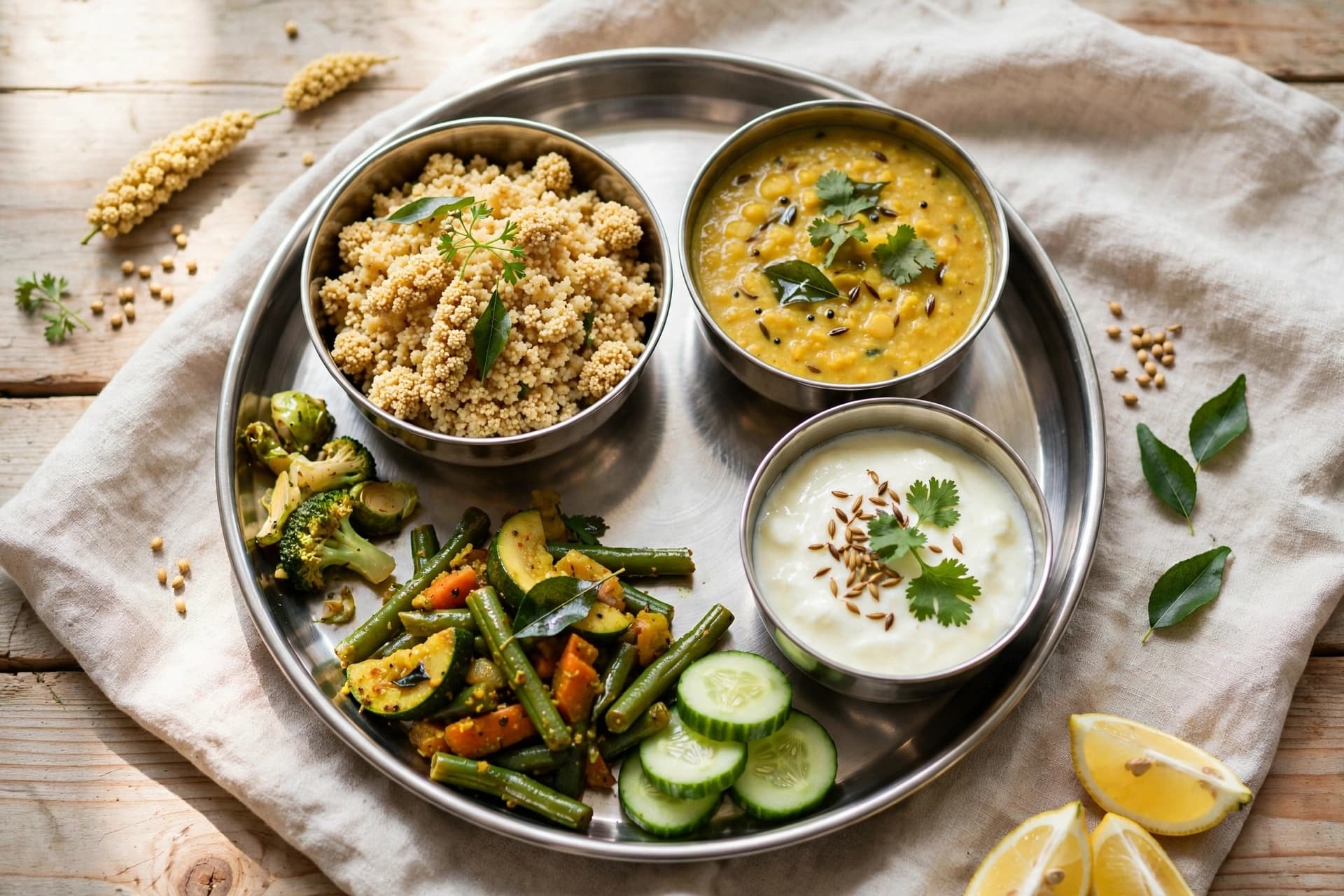
The Diabetes-Friendly Thali: No Compromise, Just a little wisdom
somewhere along the way, diabetes and dinner became enemies. When a diagnosis walks into your kitchen, your roti shrinks, your dal blurs, your sabzi forgets what made it worth eating. Family dinners quietly turn into an exercise in restraint, and the person who needs the most comfort ends up with the least of it.
Here is the truth nobody puts on the label: managing blood sugar was never about eating less life. It's about eating a little smarter. A thali does not need to be stripped down to survive a glucometer reading. It needs to be rebuilt, plate by plate, with a little more intention.
Let's walk through it, the same way you would build your plate at home.
Start with the roti, not the restriction
The instinct is to cut the roti out entirely. The smarter move is to change what it is made of.
Swap refined wheat for a mix of bajra, jowar, or besan-blended atta. These grains digest slower, release glucose gradually, and still puff up warm and soft on the tawa. Nobody at the table will ask why it tastes better. They will simply reach for a second one.
Let the dal do more work
Dal is already a diabetic's quiet ally, rich in fibre and plant protein. The trick is not touching the dal itself but what goes into the tempering. A tadka built on cumin, garlic, and a spoon of good ghee slows down how quickly the meal spikes sugar, while turning an ordinary bowl into something you actually crave. Skip the extra pinch of sugar many households add out of habit. The dal was never asking for it.
Sabzi: colour is not decoration, it is strategy
This is where most kitchens go wrong, cooking one safe vegetable on repeat until it becomes punishment. Instead, rotate bitter gourd, methi, lauki, and cauliflower through the week. Their fibre content and low glycemic load work in the background while you enjoy the meal in the foreground. Cook them the way your grandmother did: mustard oil, whole spices, patience. Flavour was never the problem. Refined oil and overcooking were.
The rice question, answered honestly
Rice does not need to disappear from the plate. It needs company. Pair a modest portion with dal, a vegetable, and a spoon of curd, and the combined fibre and protein blunt the sugar spike far better than rice eaten alone ever could. Portion, not prohibition, is the real lever here.
Curd, the plate's quiet peacekeeper
A small bowl of curd at the end of the meal is not just tradition, it's function. It slows digestion, cools the palate after spice, and gently supports gut health, which research increasingly links to steadier blood sugar. It costs nothing and asks for nothing in return.
The larger truth about this thali
None of this requires giving up what makes Indian food, Indian food. The ghee, the spice, the second helping of dal. It requires understanding your ingredients well enough to let them work for you instead of against you.
A diabetes-friendly plate, done right, does not look like a diagnosis. It looks like dinner. And that, more than any number on a glucometer, is what makes people actually stick with it.