
The Truth About Intermittent Fasting for the Indian Body Type
16 Oct 2026
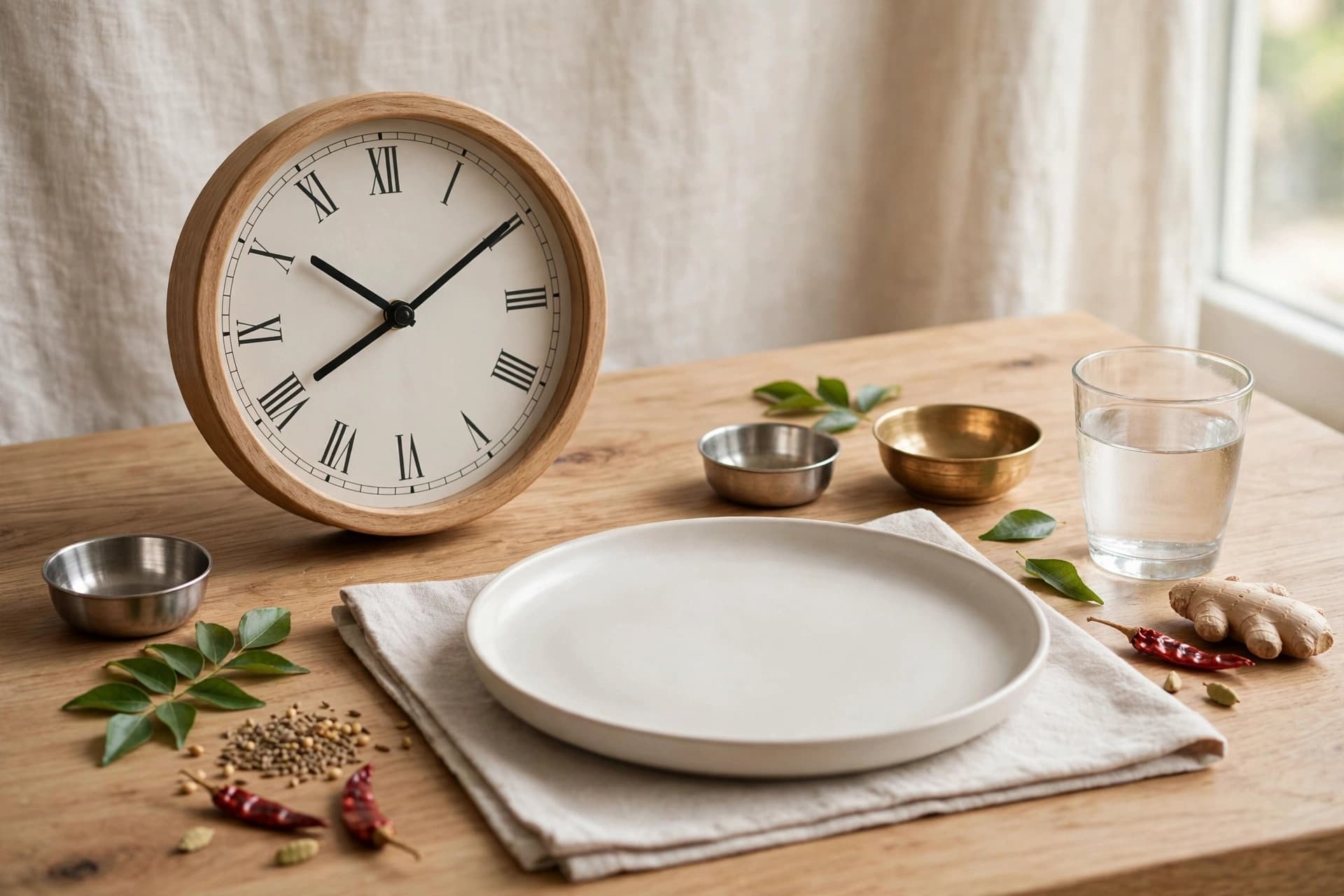
The Truth About Intermittent Fasting for the Indian Body Type
The intermittent fasting trend is taking over Instagram. Every other reel video features a fitness influencer extolling the virtues of time-restricted eating – and not only their abs, but their skin, digestion, and overall wellbeing are improving as a result. It can be tempting to jump on the bandwagon, assuming that if it worked for them, it will work for you – but most intermittent fasting trends are actually rooted in Western-centric traditions that stem from Western meal patterns and lifestyles. It’s important to ask yourself whether intermittent fasting is actually suited to your own dietary patterns or not.
Our meal patterns were never built around intermittent fasting
Think about the typical Indian diet. First, tea with biscuits or mathri, then breakfast which is mostly carbs like poha, idli, paratha, upma, or dosa. Lunch is rice/roti with dal and sabzi, then evening tea with fried or roasted snacks, and dinner once again is roti or rice with dal and sabzi. Adding in festivals and family gatherings, and counting on the fact that most Indian families rely on food as an expression of love and affection, you have a pattern of frequent, smaller meals as opposed to the larger ones in the mornings and evenings you see in Western countries. Indian food is also heavily spiced and deep-fried, making digestion slightly more difficult. It’s hard to adjust such a rich and varied diet to fit within a narrow eating window – and what’s more, it could lead to binges outside of that eating window that negate any potential benefits.
We have different kinds of fasting, built right into our cultural traditions
Fasting itself has a long, rich history in Indian culture, spanning dozens of traditions and hundreds of years. From Navratri, Ekadashi, and Karva Chauth to Ramadan and Jain fasting – Indians have been religiously observing fasts for hundreds of years. Some of these are done in accordance with certain festivals, and others are community events where people partake in extended periods of fasting followed by heavy feasts, all with a certain spiritual or cultural significance. The kind of intermittent fasting popular in Western social media is much more austere and leaves out that cultural and spiritual context entirely. It loses the importance of the festivals, of the social aspects of these fasts – and it turns a potentially deeply wholesome practice into just another tool for weight loss.
The concept of an ‘Indian body type’ is a myth
You may have come across the idea that Indians have bodies that are fundamentally different from the prototypical ‘Western’ body – that we’re much more prone to developing type 2 diabetes, or that our bodies process and store fat differently than Caucasians or Asians. This is partially true – there is a genetic disposition among South Asians to develop insulin resistance and unhealthy visceral fat deposits. However, South Asia is extremely geographically and genetically diverse, and this predisposition affects mainly the Indian sub-continent as a whole, not necessarily every individual born in India or identifying as Indian. Not to mention that there are dozens of variables that contribute to a person’s body type beyond genetics and general ethnicity – diet, exercise, sleep, stress levels, and pre-existing medical conditions all play a role. ‘The Indian body type’ is a reductive concept that fails to account for the wide diversity of the Indian diaspora and shouldn’t be used as an excuse to ignore your own personal health needs.
Does this mean intermittent fasting is good or bad for Indians?
It really depends on the individual. Some people find that intermittent fasting helps them to lose weight, as it lets them reduce the number of calories they consume without having to count them or restrict entire food groups. It can be an important tool for improving one’s relationship with food and their body. That said, some people feel physically ill if they go too long without eating, or experience mental health issues if they miss out on meals. People with diabetes or a history of eating disorders may find that intermittent fasting only exacerbates their conditions. It’s important to listen to your body in this regard, and not to compare yourself to others – what works for your friend may not work for you. If you have serious health concerns, consult a physician before trying any new diets or eating patterns.
If you want to try intermittent fasting
you don’t have to change your entire diet to accommodate it – and you should absolutely not try to eat the way some random Instagram influencer does, just because they got six-pack abs doing it
Most traditional Indian foods are already healthy and balanced, and eating them within your eating window will let you enjoy all their nutritional benefits without having to stuff yourself in a short amount of time. Within your eating window, focus on protein- and fiber-rich foods and limit heavy, fatty dishes if you want to reduce your calorie intake. Moong dal khichdi with ghee, sprouts salad, curd rice, vegetable dalia, ragi dosa or roti, palak or methi chutney with roti, sambar with brown rice, besan chilla, soaked almonds and walnuts, coconut chutney, buttermilk, roasted makhana, fruits like papaya or guava, boiled eggs (if you eat eggs), paneer bhurji, and simple dals like masoor and moong dal are all healthy options that won’t leave you feeling unsatisfied.
They’re high in fiber and protein, allowing you to feel full longer, and are easier on the digestive system – making them perfect for intermittent fasting.