
Winter Foods to Help Your Body Prepare for Winter
30 Oct 2026
Winter Eating
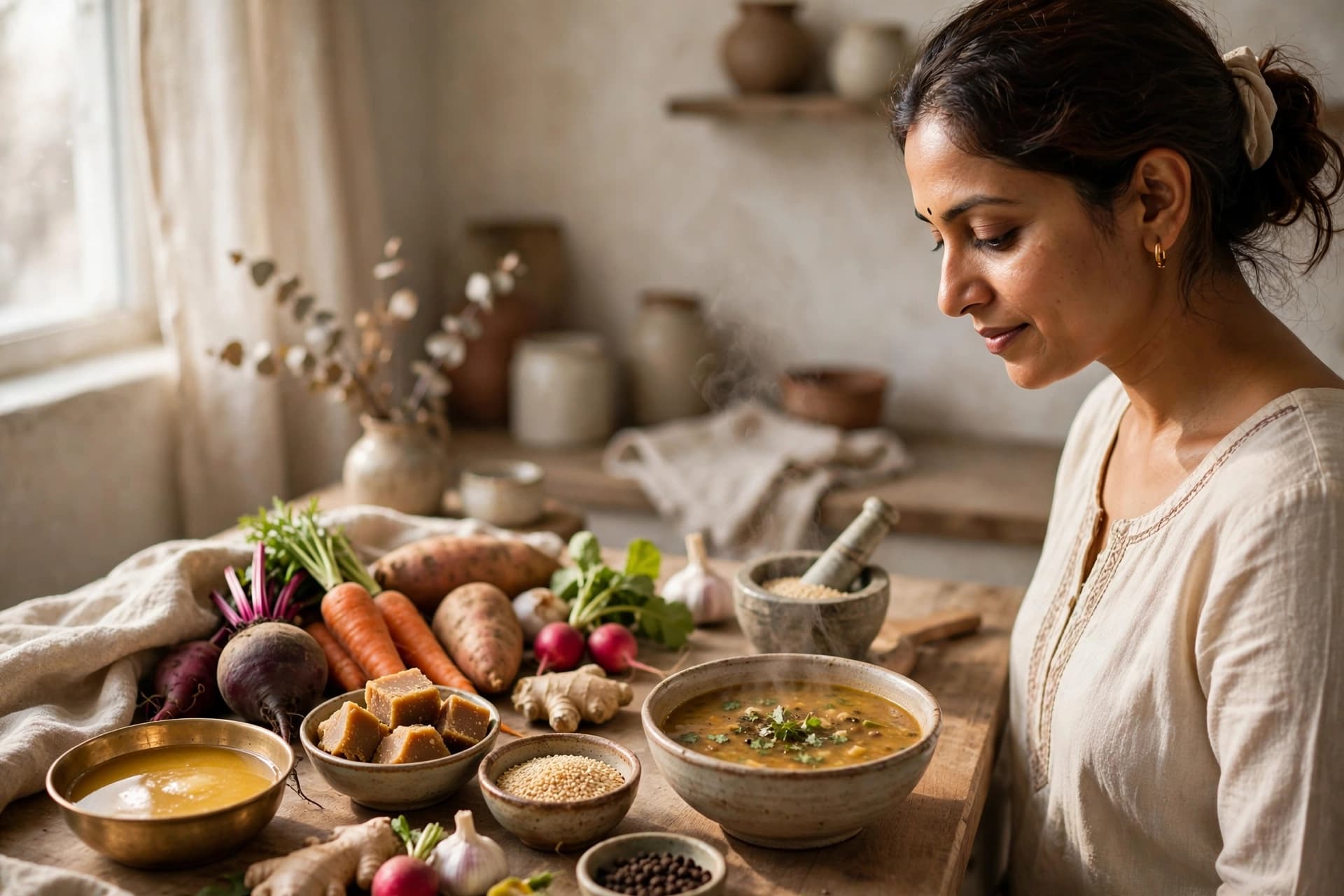
When the weather gets colder, many of us think about keeping our immune systems healthy. In India we have always had a tradition of eating warming foods during the colder months. Eating Sarson ka saag, bajra rotis and steaming bowls of Dal will help make you feel cosy. Many of these foods will also be highly nutritious.
Although it is important to have realistic expectations about what food can do for you. We know that there isn’t a magic switch to boost immunity. Eating healthy meals can help to keep you healthy, however no food or drink can guarantee protection from colds or flu.
How to Help Your Body
Many factors play a part in keeping your immune system healthy. Getting enough sleep, managing stress, regular physical activity, being vaccinated, practicing good hygiene and eating a balanced diet. Eating a variety of foods will give your body the energy, proteins, vitamins and minerals needed to function correctly.
Foods to Add
These foods can help improve your general health, however they shouldn’t be seen as a barrier to illness.
Vitamin C – Amla can be used in chutneys, murabba or eaten raw with a pinch of salt. Guavas with chaat masala. Fresh oranges and kinnow. Squeeze lemons on your dal, salads or hot water. Tomatoes and Capsicum in sabzis, soups and salads.
Protein – Dals, eggs, paneer, curd, fish, chicken, sprouts and soya. Tadka dal, bhurji, sabzis, chaat or grilled dishes. Protein helps your body to build and repair tissues, including immune cells.
Zinc and Selenium – Pumpkin seeds can be eaten as a roasted snack. Chickpeas in curries and chaat. Sesame in chikki, laddoos and chutneys. Nuts – small handful. Eggs.
Vitamin A – Carrots, spinach, sarson, bathua and methi in saag, parathas and dals. Sweet potato can be eaten roasted or in chaat. Pumpkin can be eaten in sabzi or soup. Beetroot can be added to salads and raita.
Vitamin D – The main source of vitamin D is from sunlight. It can be found in small amounts in eggs, fish and fortified milk. Many people in India suffer from a lack of vitamin D so it may be worth speaking to a doctor.
Traditional warming foods – Ginger, garlic, turmeric, Tulsi and black pepper can be used in your chai, soups and kadha. Jaggery, til, ghee (in moderation) and Gajar Halwa (in moderation). Bajra and Makki Rotis. These are a great traditional food to help you feel cosy. However there is little research into their specific benefits and results can vary.
Friendly to your gut – Curd, buttermilk, high fibre vegetables, dals and wholegrains. Some people like to eat curd and buttermilk earlier in the day during the winter months. Many families will do this.
Drink – Hot water, soups and herbal teas. During the colder months people tend to drink less water. So try to have some throughout the day.
Lifestyle
Try to get good quality sleep regularly.
Wash your hands frequently, especially before eating and after being outside.
Be physically active.
Get some sun.
Make time to manage your stress.
Ensure you are up to date with vaccinations.
Myths
Myth: Vitamin C prevents colds.
Fact: Vitamin C rich foods are part of a balanced diet however won’t prevent you getting a cold.
Myth: Cold foods and drinks cause colds. Fact: Colds are caused by viruses. Many people feel more comfortable eating warm foods.
Myth: Immune boosting products such as supplements are a quick fix.
Fact: There is no quick fix. Eating regular healthy meals, sleeping and being vaccinated are more important. Always speak to a doctor about taking any supplements.
Myth: Kadha and home remedies help with infection.
Fact: They can be comforting and many families have traditions around them however they shouldn’t be used as a substitute.
Myth: Eat more to keep warm.
Fact: Eating balanced meals regularly will be sufficient.
When to See a Doctor
If you have a high/long term fever, difficulty breathing, chest pain or symptoms that are longer than expected then please see a doctor. If someone is an infant, elderly or pregnant then try to see a doctor sooner.
If you suffer from Diabetes, Asthma, Allergies, Kidney issues or are pregnant then please speak to a doctor or registered dietitian before making large changes to your diet.
Please note that honey shouldn’t be given to infants. Pregnant women and young children should take caution when using herbs and lots of spices.