
Your Fridge and Nutrients: Storage Habits That Keep Food Fresh
30 Oct 2026
Food and Nutrition
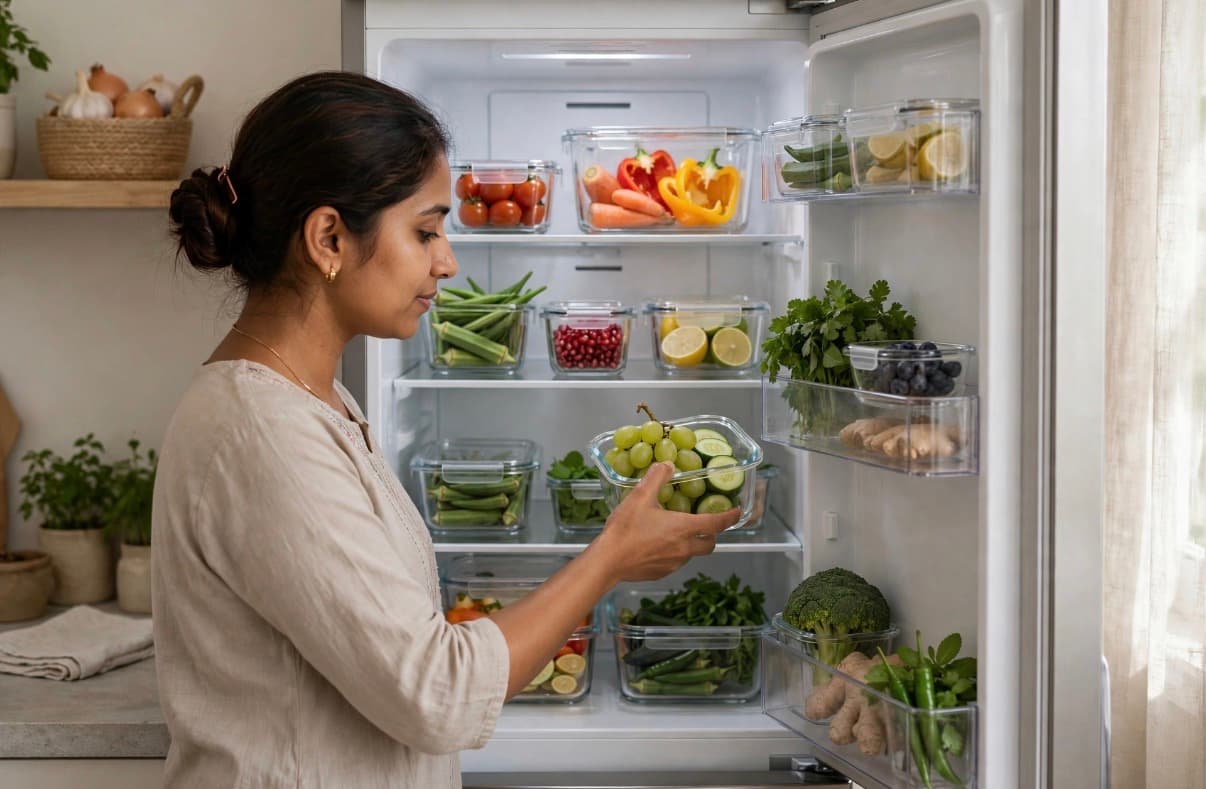
The manner in which we store and prepare food at home can impact freshness, flavor, and some of the nutrients. The good news is that we can make a noticeable difference by adopting certain practices, most of which do not require a steep learning curve or fancy equipment.
Why storage matters
Well-stored food looks better, tastes better, lasts longer, and reduces the need to rush out and buy more often. The question of nutrition is part of the picture. It helps to think of smart storage as smart kitchen habits rather than a science experiment with a control group and an experimental group.
What affects the nutrients
Some vitamins, notably the C content and B content, are sensitive to exposure, heat, and time. Chopping, lengthy cooking, and multiple reheating can contribute to nutrient loss, although, in most cases, the losses are not significant. The research on food storage and its effect on the nutritional value of home-cooked meals is limited, so the following suggestions should be treated as general guidelines. Moreover, it is impossible to overestimate the importance of a balanced diet and fresh products in terms of nutritious eating.
How to store everyday Indian foods
Most leafy greens
Palak, methi, coriander, and curry leaves should be stored in a dry form (wrapped in a clean cloth or paper towel) and washed before use.
Cut fruits and vegetables
It is better to cut them right before preparation if possible, but if it is not possible, store them in a covered container in the fridge.
Whole fruits and vegetables
They can be stored at room temperature in a cool, dry, and well-ventilated place. Most vegetables and fruits, including onions, potatoes, tomatoes, bananas, and mangoes, can be stored outside the fridge. However, note that most fruits and vegetables are best kept in the fridge, while ripe fruits can be stored there as well.
Cooked dal, rice, and sabzi
It is important to cool them before putting them in the fridge in an airtight container. Reheat until steaming hot before serving and try not to reheat the same dish more than once. To avoid such situations, consider reheating only the desired portion of food.
Curd, milk, and paneer
They should be kept covered and cold at all times and checked for an off smell or appearance before use.
Atta, flours, nuts, and seeds
It is better to store them in airtight containers in a cool, dry and dark place to prevent them from going rancid.
A quick recap on how to store commonly used ingredients:
The same goes for
• Palak and methi: dry, wrapped in a paper towel or cloth;
• Coriander and curry leaves: remove any damp or yellowed leaves and store the remaining in a dry container;
• Onions and potatoes: a cool, dry, and well-ventilated place;
• Tomatoes: firm ones can be stored outside the fridge, but the best place to keep them is the fridge;
• Bananas and mangoes: let them ripen outside the fridge, and then you can store them in the fridge;
• Cooked dal: cool it down to room temperature, cover the container with a lid, and store in the fridge;
• Curd and paneer: keep them in the fridge, covered;
• Atta and besan: airtight container in a dry, cool place;
• Groundnuts and almonds: airtight container, away from heat and sunlight;
• Cooking oil: a tightly closed bottle, away from the stove and sunlight.
Cooking habits that make a difference
It is essential not to overcook, boil, simmer, or simmer food for too long, as it reduces some of the nutrients. It is also a good idea to reduce the amount of water used for cooking. Some practical methods include steaming, pressure cooking, or sautéing food instead of boiling it in lots of water. Moreover, when possible, use the water you have used to cook dal or vegetable in another dish that requires water, such as soup or gravy. Always remember to cover the pot when cooking and covering food when it is done by placing a tight lid on it. This will help retain moisture and nutrients.
Common myths about food storage and nutritional value
Myth: Frozen vegetables do not have nutrients.
Fact: Frozen food is a great option, especially in winter when seasonal
produce is unavailable.
Myth: The fridge is bad for food nutrients.
Fact: The fridge helps food stay fresh for longer and, therefore, helps retain its nutrients.
Myth: Always eat food fresh, directly from the market or pantry, not stored anywhere.
Fact: Well-stored food is an excellent part of a nutritious diet. Smart storage habits and smart reheating are the cornerstone of nutritious meals.
Smart fridge habits
Do not overcrowd the fridge with food so that cold air can circulate. Store raw food and cooked food separately. Always remember to clean the fridge regularly and get rid of expired products. Moreover, if you can, make use of the first-in-first-out policy where you eat food that has been stored first before food that has been stored later. Furthermore, it is always a good idea to label leftovers so that you know what they are and when they were made.
When it comes to food safety, it is essential to throw away any questionable food, namely, food with an unusual or unpleasant odor, slimy texture, mold, or appearance. Leftovers should be eaten within 2-3 days after preparation. Pregnant women, children, the elderly, and those with impaired immunity should be especially careful when it comes to leftovers, as their bodies may not handle old food as well as other populations. If you have any health conditions or concerns about your dietary pattern, it is a good idea to consult a doctor or a registered dietitian.